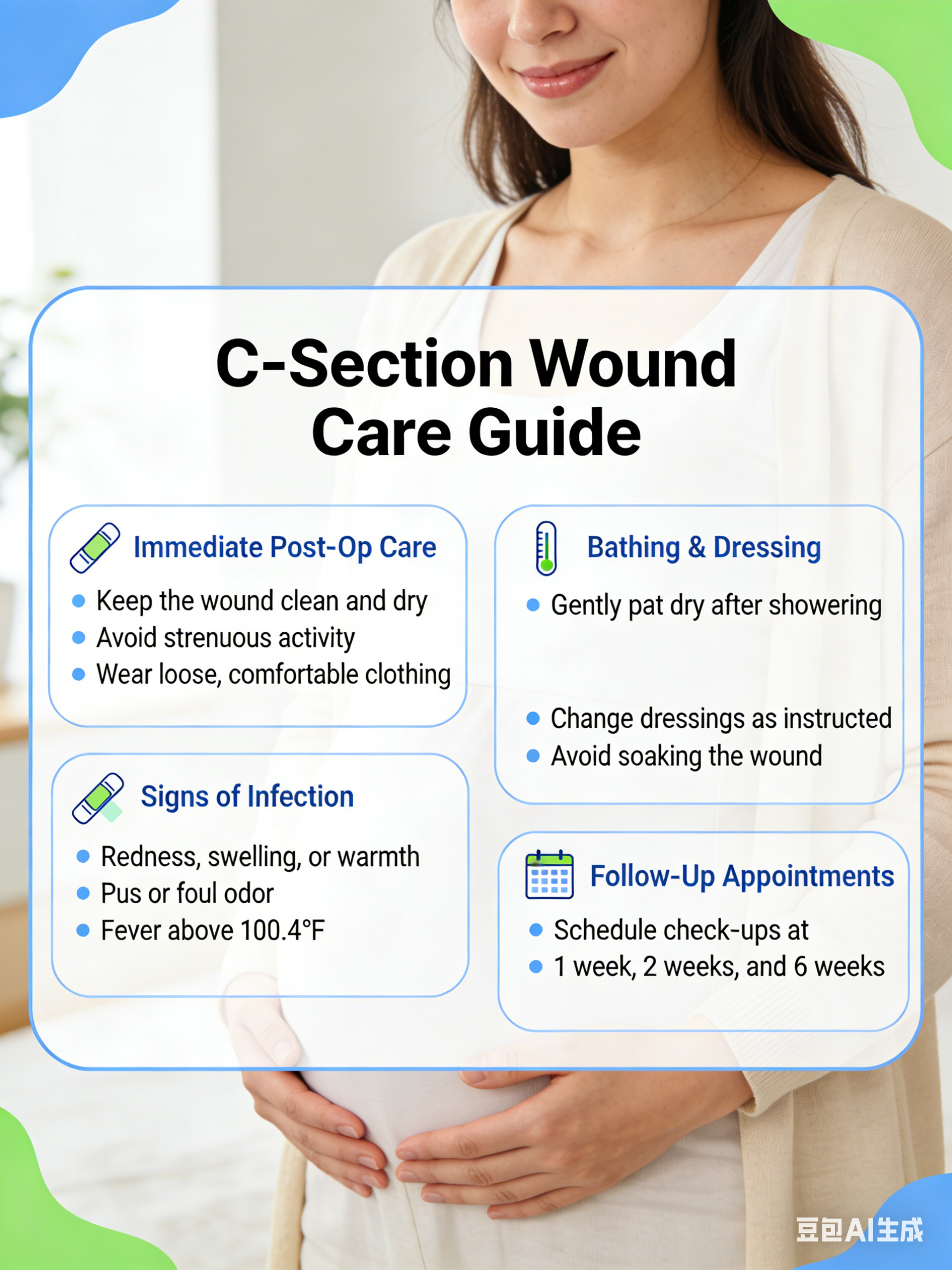




A Caesarean section (C-section) is a major abdominal surgery, and proper wound care is essential to prevent complications and promote optimal healing. This guide provides evidence-based information on common postpartum concerns, from immediate incision care to long-term scar management. Always consult your midwife, GP, or healthcare provider for personalised advice.
1. How to correctly care for a C-section wound
– Keep it clean: Gently wash the incision with mild, unperfumed soap and water during your daily shower. Avoid scrubbing or directing strong water pressure onto the wound.
– Dry thoroughly: Pat the area dry with a clean, soft towel, or use a hairdryer on a **cool setting** to ensure the wound and skin creases are completely dry—moisture can encourage infection.
– Support the area: When coughing, laughing, or moving, place a pillow or your hands firmly over the incision to reduce tension and discomfort.
– Avoid topical products: Do not apply creams, oils, or powders until the wound is fully closed and any scabs have fallen off naturally (usually 2–3 weeks post-surgery).
– Wear loose, high-waisted clothing: This prevents friction and irritation directly on the healing scar.
2. What to do if the C-section wound is very itchy
Itching is a normal part of healing, often caused by nerve regeneration and skin stretching. However, scratching can introduce bacteria and delay recovery.
– Do not scratch: Resist the urge.
– Apply a cool compress: A clean, damp cloth placed over the area can provide relief.
– Use silicone gel or sheets (once healed): These products hydrate the scar tissue, reducing itchiness and improving scar appearance.
– Seek medical advice if: The itching is accompanied by a spreading rash, redness, or hives—this could indicate an allergic reaction to sutures or an infection.
3. Signs of an infected C-section wound
Infections typically develop 3–7 days after surgery. Contact your GP or maternity unit immediately if you notice any of the following:
– Spreading redness: Redness extending more than 1–2 cm from the incision line.
– Worsening pain: Pain that increases rather than improves over time.
– Swelling or hardness: The area feels firm or swollen.
– Discharge: Pus (yellow/green) or any foul odour coming from the wound.
– Heat: The skin around the incision feels hot to the touch.
– Fever: A temperature above 38°C (100.4°F) or chills.
4. What to do if the C-section wound opens (wound dehiscence)
If you notice the wound edges separating or a sudden gush of fluid:
– Stop all activity immediately.
– Cover the area** with a clean, dry, non-stick dressing or sterile pad.
– Do not attempt to close it yourself** or apply any creams.
– Seek urgent medical attention (A&E or your maternity unit). Small separations may heal with proper wound care, but larger openings require professional assessment and possibly special dressings or re-suturing.
5. Why do some C-section scars become more prominent?
Several factors influence scar appearance:
– Genetics: Some individuals are predisposed to keloid (overgrown scar tissue) or hypertrophic (raised) scarring.
– Tension during healing: Constant pulling from abdominal muscles and movement can stimulate excess collagen production.
– Delayed healing or infection: Wounds that take longer to close or become infected are more likely to scar noticeably.
– Skin type: Darker skin tones may develop hyperpigmentation (darkening) of the scar.
6. How to fade and flatten a C-section scar
Scar management can usually begin 4–6 weeks postpartum, once the wound is fully healed and no longer tender. Always check with your healthcare provider first.
– Silicone gel or sheets: Clinically proven to flatten and fade scars by hydrating the collagen. Use daily for at least 12 weeks.
– Gentle scar massage: Once healed, massage the scar in small circles and horizontal/vertical strokes for 5–10 minutes daily. This breaks down adhesions and improves circulation. Use vitamin E oil or a non-perfumed moisturiser.
– Sun protection: New scars are highly susceptible to UV damage, which can cause permanent darkening. Cover the area or apply a broad-spectrum sunscreen of at least SPF 50+.
– Be patient: Scar remodelling continues for 12–18 months. Consistency with these methods yields the best results.
Disclaimer: This information is for educational purposes only and does not replace professional medical advice. Always consult your midwife, GP, or a qualified healthcare provider for concerns about your C-section recovery.
a.本站所有文章,如无特殊说明或标注,均为本站原创发布。
b.任何个人或组织,在未征得本站同意时,禁止复制、盗用、采集、发布本站内容到任何网站、书籍等各类媒体平台。
c.如若本站内容侵犯了原著者的合法权益,可联系我们进行处理。









No comments yet