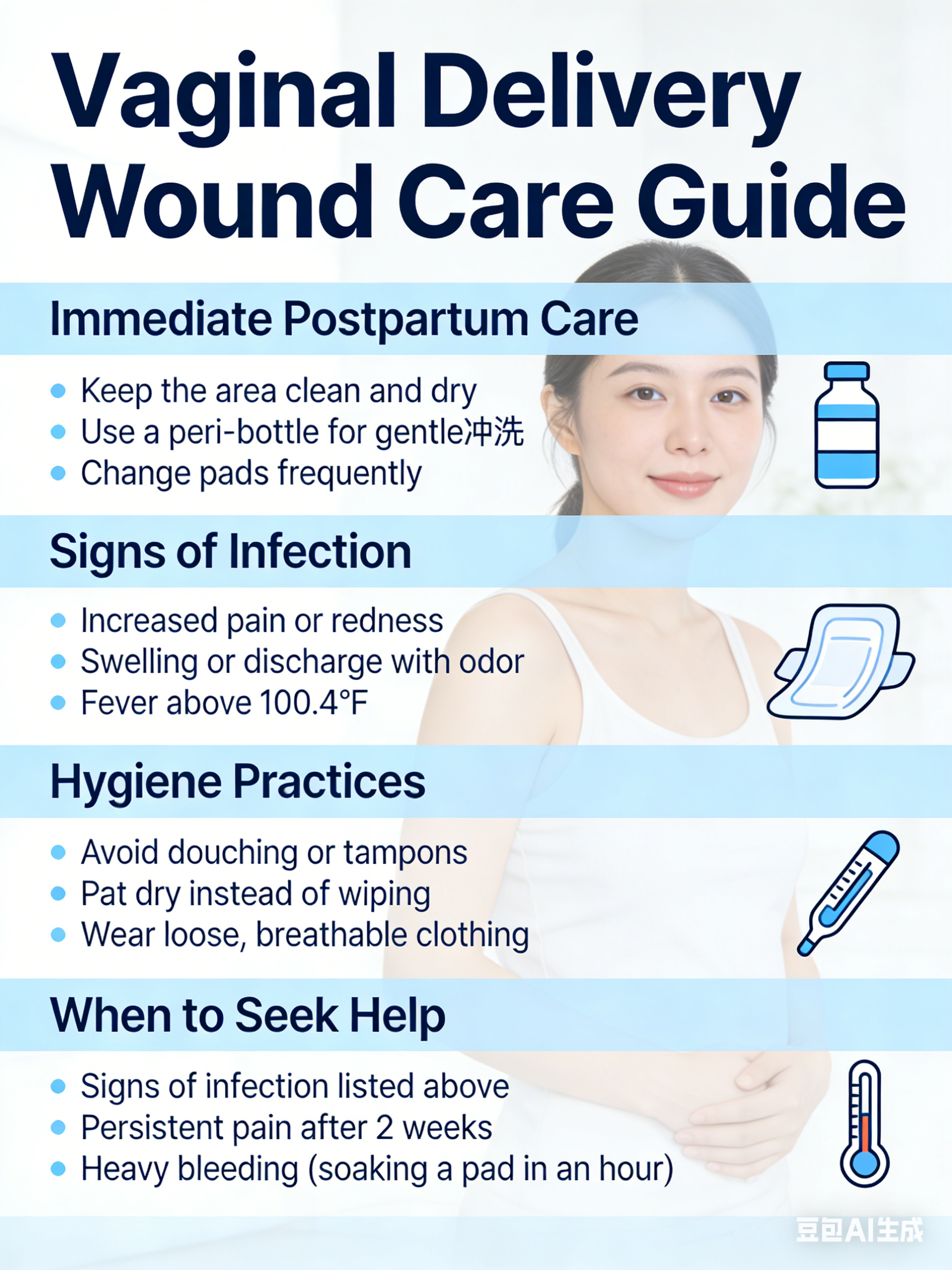




A vaginal birth, whether assisted or unassisted, can result in perineal trauma—ranging from minor grazes to tears or an episiotomy (a surgical cut). Proper care of the perineal area is essential for preventing infection, managing discomfort, and promoting optimal healing. This guide provides evidence-based information on common postpartum concerns.
Always consult your midwife, GP, or health visitor for advice tailored to your specific situation.
1. How to correctly care for a perineal wound
Good hygiene and gentle handling are the foundations of healing.
– Keep it clean: Gently cleanse the perineal area daily with warm water. You can do this in the shower or using a perineal irrigation bottle (sometimes called a peri-bottle) filled with plain warm water after using the toilet. Avoid using soap directly on the wound, as it can cause irritation.
– Wipe correctly: Always wipe from front to back (towards the anus) to prevent bacteria from the bowel entering the vaginal area or the wound.
– Keep it dry: Pat the area dry gently with a soft, clean towel or use a hairdryer on a **cool setting**. Change sanitary pads regularly (every 2–4 hours) to maintain a clean, dry environment. Avoid using tampons.
– Use cold therapy: Applying an ice pack wrapped in a clean cloth to the perineum for 10–20 minutes during the first 24–48 hours can significantly reduce swelling and pain.
– Pain relief: Simple painkillers such as paracetamol or ibuprofen (if suitable for you) can help manage discomfort. Always check with your midwife or pharmacist first.
2. What to do if you suspect a perineal infection
Infections are relatively uncommon but require prompt medical attention. Contact your midwife, GP, or maternity unit immediately if you notice any of the following:
– Increasing pain: Pain that worsens over time, rather than improving.
– Redness and swelling: Spreading redness or significant swelling around the wound.
– Discharge: Yellow or green pus, or any foul-smelling discharge coming from the wound.
– Wound separation: The edges of the wound pulling apart.
– Systemic symptoms: A temperature above 38°C (100.4°F) or flu-like symptoms (chills, aches).
Do not attempt to treat a suspected infection at home with over-the-counter creams. You may require antibiotics or specialised wound care from a healthcare professional.
3. How to manage perineal tears (1st, 2nd, 3rd, and 4th degree)
Tears are graded by severity, and care advice may vary accordingly.
– 1st and 2nd degree tears / Episiotomy: These are usually sutured (stitched) shortly after birth. The general care advice in Section 1 applies. Stitches are dissolvable and do not need to be removed.
– 3rd and 4th degree tears: These are more complex injuries affecting the anal sphincter or rectum. You will receive specific aftercare instructions, which typically include:
– Stool softeners: Prescribed for several weeks to prevent constipation and straining.
– High-fibre diet: To ensure bowel movements are soft and easy to pass.
– Specialised follow-up: You will likely be referred to a perineal clinic or physiotherapist for ongoing monitoring and support.
– General tips for all tears:
– Pelvic floor exercises: Once comfortable, gently starting pelvic floor exercises can improve blood flow to the area and aid healing.
– Avoid constipation: Drink plenty of water and eat fibre-rich foods (fruit, vegetables, whole grains). Do not strain on the toilet.
4. Why the perineal wound itches and what to do
Itching around a healing perineal wound is extremely common and usually a normal sign of tissue repair. As the skin and muscle knit back together, nerve endings regenerate, which can cause an itchy sensation.
– Do not scratch: This can damage the new tissue and introduce infection.
– Cool compress: A clean, cool, damp cloth placed on the area can provide relief.
– Warm bath: A shallow, warm (not hot) bath (sitz bath) can be soothing and cleanse the area gently.
– Keep dry: Ensure the area is thoroughly dried after washing, as trapped moisture can exacerbate itching.
– Seek advice if: The itching is severe, persistent, or accompanied by signs of infection (see Section 2).
Disclaimer: This information is for educational purposes only and does not replace professional medical advice. Always consult your midwife, GP, or a qualified healthcare provider for concerns about your postnatal recovery.
a.本站所有文章,如无特殊说明或标注,均为本站原创发布。
b.任何个人或组织,在未征得本站同意时,禁止复制、盗用、采集、发布本站内容到任何网站、书籍等各类媒体平台。
c.如若本站内容侵犯了原著者的合法权益,可联系我们进行处理。





No comments yet