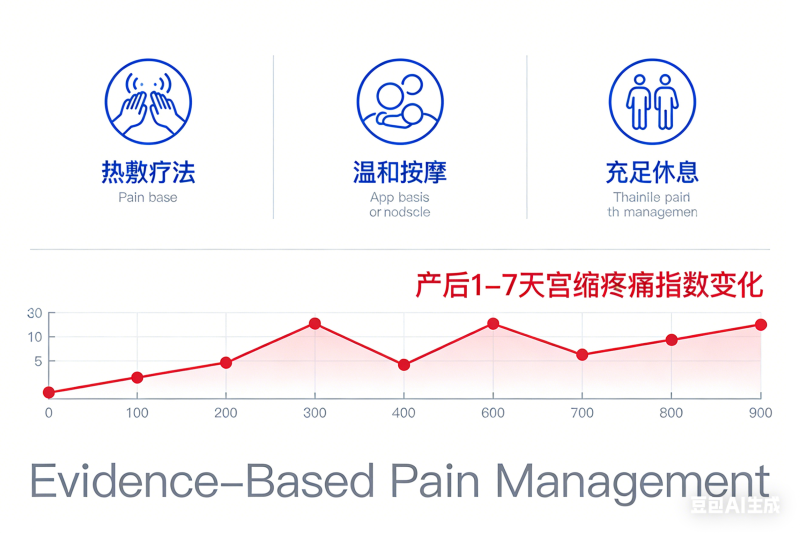





Postpartum Menstrual Cycle Guide: Timing, Irregularities & Heavy Bleeding
一、When Will My Period Return After Childbirth?
The return of your menstrual period (medically termed menstrual resurgence) varies greatly from person to person and is primarily influenced by breastfeeding and individual physiology.
Key influencing factors are outlined below:
| Feeding Method | Effect on Period Return | Average Timeframe |
|---|---|---|
| Formula Feeding | Hormone levels normalize quickly, leading to the fastest return. | Around 6-10 weeks postpartum. |
| Mixed Feeding | Breastfeeding delays ovulation, so timing is unpredictable. | Anywhere from 2-6 months postpartum or later. |
| Exclusive Breastfeeding | Frequent, on-demand nursing (day and night) significantly suppresses ovulation. | Often 4-6 months or later, possibly after introducing solids. |
Important Note:
-
Ovulation Comes First: Ovulation can occur before your first postpartum period, so contraception is necessary if sexually active, even without a period.
-
Significant Individual Variation: The above are common scenarios, and all fall within the normal range.
二、What If My Postpartum Periods Are Irregular?
It is very common for the first few postpartum periods to be irregular in cycle length, duration, and flow. It typically takes some time (about 3-6 cycles) to re-establish regularity.
Main Causes & Management:
-
Fluctuating Hormone Levels
-
Cause: The body (especially ovaries and pituitary) needs time to restore its hormonal rhythm. Prolactin in breastfeeding mothers suppresses estrogen.
-
Management: No specific treatment is usually needed. Maintain a healthy lifestyle and allow your body time to readjust.
-
-
Physical & Mental Stress/Fatigue
-
Cause: Sleep deprivation, exhaustion, and emotional fluctuations from caring for a newborn can affect hypothalamic function, leading to irregular cycles.
-
Management: Seek help from family to get more rest. Gentle exercise (like walking) can help regulate both body and mind.
-
-
When to See a Doctor?
-
If your period hasn’t returned more than 3 months after completely stopping breastfeeding.
-
If, after return, your cycles remain extremely irregular (e.g., shorter than 21 days or longer than 35 days) for more than 3 cycles.
-
三、What If My Postpartum Periods Are Very Heavy?
To objectively determine if your flow is “too heavy,” consider these criteria:
-
Key Indicators:
-
Needing to change pads or tampons every 1-2 hours for a full day.
-
Having to wake up more than once at night to change protection.
-
Passing blood clots larger than a coin (or a golf ball).
-
Experiencing heavy bleeding for more than 7 days.
-
Possible Causes & Action Steps:
-
The first period may be heavier due to built-up lining; it’s usually fine if it doesn’t meet the above criteria and lightens later.
-
Hormonal Imbalance:
A common cause leading to irregular shedding of the uterine lining. -
Such as retained placental tissue, incomplete uterine involution, poor healing of a C-section scar (e.g., niche), or gynecological conditions (e.g., fibroids, polyps, adenomyosis).
Clear Signs to Seek Medical Help:
Consult a doctor immediately if you experience ANY of the following:
-
Bleeding meets the “heavy” criteria above, or includes large clots.
-
Feeling dizzy, weak, palpitations, or looking pale (signs of anemia).
-
Severe abdominal pain or fever.
-
Abnormal bleeding with a foul odor.
Summary & Reminder:
Your postpartum period is a barometer of your recovery. Be patient with your body and the process. Monitor closely, distinguish between normal variation and warning signs, and consult your OB/GYN whenever concerned.
“When did your period return? Did you ever experience a ‘scarily heavy’ flow? Share your story and tips in the comments!”
a.本站所有文章,如无特殊说明或标注,均为本站原创发布。
b.任何个人或组织,在未征得本站同意时,禁止复制、盗用、采集、发布本站内容到任何网站、书籍等各类媒体平台。
c.如若本站内容侵犯了原著者的合法权益,可联系我们进行处理。



- Latest
- Hot
Author only