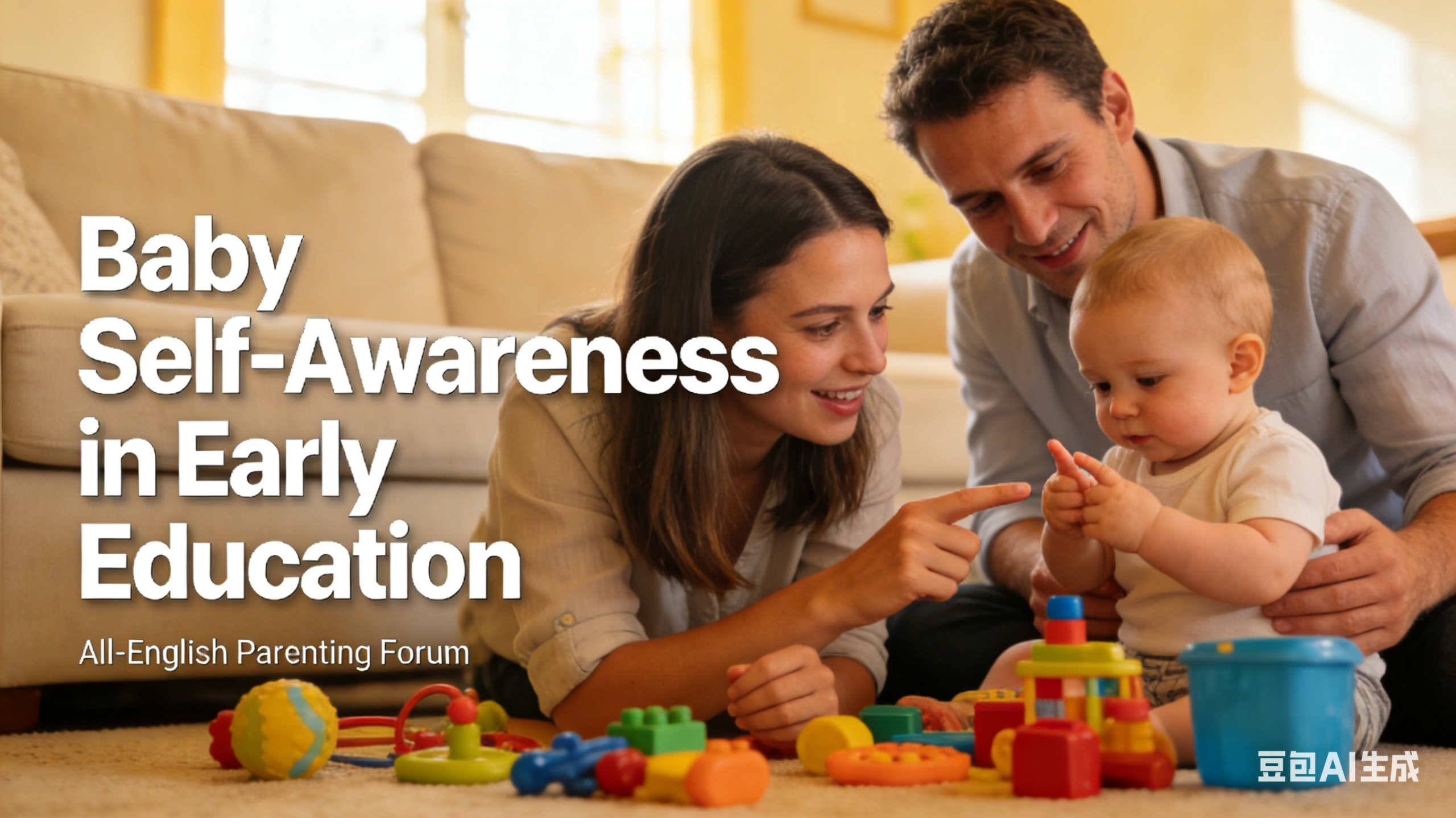




Early Childhood Development: A Professional Guide to Imitation, Self-Awareness, and Rule-Boundary Setting
Understanding your child’s developmental milestones—from mimicking your actions to declaring “Mine!” and testing limits—is key to nurturing their growth. This guide provides evidence-based insights into why children imitate, how self-awareness emerges, and how to establish healthy boundaries that support their burgeoning autonomy.
*Disclaimer: This information is for educational purposes only and does not replace professional medical or developmental advice. Always consult your health visitor or paediatrician for concerns about your child.*
Part 1: The Power of Imitation
Imitation is the engine of early learning. From birth, babies are wired to copy faces, sounds, and actions, building the neural pathways for language, social skills, and empathy.
Why Babies Love to Imitate
| Developmental Driver | How It Works |
|---|---|
| Mirror Neurons | Specialised brain cells that fire both when we perform an action and when we observe someone else doing it. These cells form the biological basis for imitation, allowing a baby to map adult actions onto their own motor system . |
| Social Bonding | Imitation is a form of communication and connection. When a parent smiles and the baby smiles back, it reinforces the caregiver-child bond . |
| Learning Mechanism | Imitation is the primary way infants learn about their world—from using a spoon to waving “bye-bye.” It is faster and more efficient than trial-and-error . |
Key Milestones in Imitation
| Age | Typical Imitation Behaviours |
|---|---|
| 0-3 months | Responds to faces; may stick out tongue in response to an adult doing so. |
| 4-8 months | Imitates simple sounds (“ah,” “ba-ba”); copies simple gestures like clapping after watching you. |
| 9-12 months | Copies actions like banging toys, shaking a rattle, or waving bye-bye. |
| 12-18 months | Begins to imitate domestic activities (pretending to talk on the phone, sweeping). |
| 18-24 months | Engages in “parallel play” (playing next to another child) and imitates peers; copies sequences of actions. |
| 2-3 years | Engages in complex pretend play (feeding a doll, building a tower); imitates social roles (like a parent scolding a toy). |
My Child Imitates Everything—Should I Be Concerned?
Imitation is a healthy and vital part of development. However, persistent imitation without any independent initiation can sometimes be a sign of something deeper.
– Typical Behaviour: Young toddlers often “shadow” parents or siblings. This is how they learn and feel connected. Most children will grow out of constant, literal imitation as their sense of self strengthens .
– When to Observe: If, by age 2-3, a child shows **no spontaneous, independent play** and only repeats what others do without variation, it is worth discussing with a health visitor. This is distinct from the common and fleeting “copycat” phase.
How to Nurture Healthy Imitation
– Model Desired Behaviours: Show kindness, patience, and good manners. Your child will absorb these.
– Narrate Your Actions: “Mummy is putting her cup on the table. Can you put yours here too?” This turns imitation into a learning game.
– Encourage Independent Play: After imitating you, gently encourage your child to try on their own. “Your turn!” This helps transition from simple copying to genuine skill acquisition.
Part 2: The Development of Self-Awareness
Around 15-24 months, a remarkable shift occurs: a child begins to realise they are a separate person from their parents. This newfound self-awareness is often accompanied by the infamous “Terrible Twos”—a critical, healthy phase of individuation.
Signs Your Child’s Self-Awareness is Developing
| Sign | Description |
|---|---|
| The “Mine!” Phase | A fierce assertion of ownership over objects, people, and space. This is not selfishness but an attempt to define the self through possessions . |
| Use of Personal Pronouns | Beginning to use “I,” “me,” and “my” correctly, moving away from referring to themselves in the third person (e.g., “Tommy want”). |
| The Power of “No” | Saying “no” is a declaration of autonomy. It is not necessarily defiance but a way to practice having a separate will . |
| Self-Recognition | In a mirror test, a child will touch their own nose or remove a sticker from their own forehead, showing they understand the reflection is them. |
| Emotional Volatility | Big feelings (tantrums, frustration) emerge because the child desires independence but still relies on caregivers for safety and regulation . |
How to Navigate the Self-Awareness (Sensitive) Period
1. Acknowledge Their Feelings, Not Their Logic. A tantrum is not a rational choice. Validate their emotion without giving in to unreasonable demands. “I see you are so angry because you want the red cup. You are frustrated.”
2. Offer Limited, Genuine Choices. This satisfies their need for control within safe boundaries. “Do you want to put on your socks first, or your shirt?” rather than “Do you want to get dressed?”
3. Protect Their “No.” If it’s not a matter of safety or health, respect their “no.” This teaches them that their voice matters and builds confidence. Use your “no” for things that truly matter .
4. Praise the Process, Not Just the Outcome. “You worked so hard to put that shoe on by yourself!” This reinforces their sense of competence.
Part 3: Establishing Rules and Boundaries
Rules provide a child with a sense of security. When a child understands the structure of their world, they feel safe to explore it.
Why “Laying Down the Law” Matters
| Purpose | Explanation |
|---|---|
| Safety | Rules create a physical and emotional safety net. “We hold hands in the car park” and “We use gentle hands” are essential for protection. |
| Emotional Security | Consistent boundaries reduce anxiety. When limits are predictable, children feel safe and learn to trust their caregivers. |
| Self-Regulation | Learning to follow rules is the foundation of self-discipline. It teaches a child to pause and think, rather than react impulsively . |
| Social Skills | Rules like “take turns” and “share” are the building blocks of successful friendships and social interaction . |
How to Set Age-Appropriate Rules
For toddlers and preschoolers, rules should be simple, positive, and consistently enforced.
Step 1: Keep It Simple
– Good: “We use gentle touches.” “Feet stay on the floor.” “We sit to eat.”
– Avoid: Long explanations or abstract concepts.
Step 2: Be Consistent
– Consistency is more important than the specific rule. If a rule is enforced one day but ignored the next, it becomes a source of confusion and testing. All caregivers (parents, grandparents, childminders) should be on the same page.
Step 3: Use Natural and Logical Consequences
– Natural Consequence: If a child throws a toy, they cannot play with it for a while. (This happens without much intervention.)
– Logical Consequence: If a child runs away in the car park, they must hold your hand or go in the buggy. (This is a direct, related consequence to their action.)
– Avoid: Punishments that are unrelated, shaming, or overly harsh .
Step 4: Acknowledge and Reinforce Positive Behaviour
– Notice and praise when your child follows a rule. “Thank you for waiting so patiently for your turn!” This is far more effective than focusing on the missteps.
Step 5: Adapt Rules as Your Child Grows
– Rules for a 1-year-old (don’t touch the TV) will evolve into rules for a 3-year-old (we ask before changing the channel). Regularly review and update boundaries to match your child’s developing skills.
Summary: Key Takeaways
| Developmental Area | Core Principle for Parents |
|---|---|
| Imitation | It is a powerful learning tool. Model positive behaviour and narrate your actions to turn imitation into a learning opportunity. |
| Self-Awareness | It is a healthy, essential phase. Support your child’s autonomy by offering limited choices and validating their big feelings, even when setting limits. |
| Rules & Boundaries | They provide safety and security. Set clear, consistent, and age-appropriate rules, focusing on praising positive behaviour and using logical consequences. |
**Key Resources:**
– NHS Start for Life: www.nhs.uk/start-for-life
– Family Lives (parenting support): www.familylives.org.uk
– ICAN (speech, language, and communication): www.ican.org.uk
*References available upon request. Key sources: Zero to Three , CDC Milestones , APA .*
a.本站所有文章,如无特殊说明或标注,均为本站原创发布。
b.任何个人或组织,在未征得本站同意时,禁止复制、盗用、采集、发布本站内容到任何网站、书籍等各类媒体平台。
c.如若本站内容侵犯了原著者的合法权益,可联系我们进行处理。




No comments yet