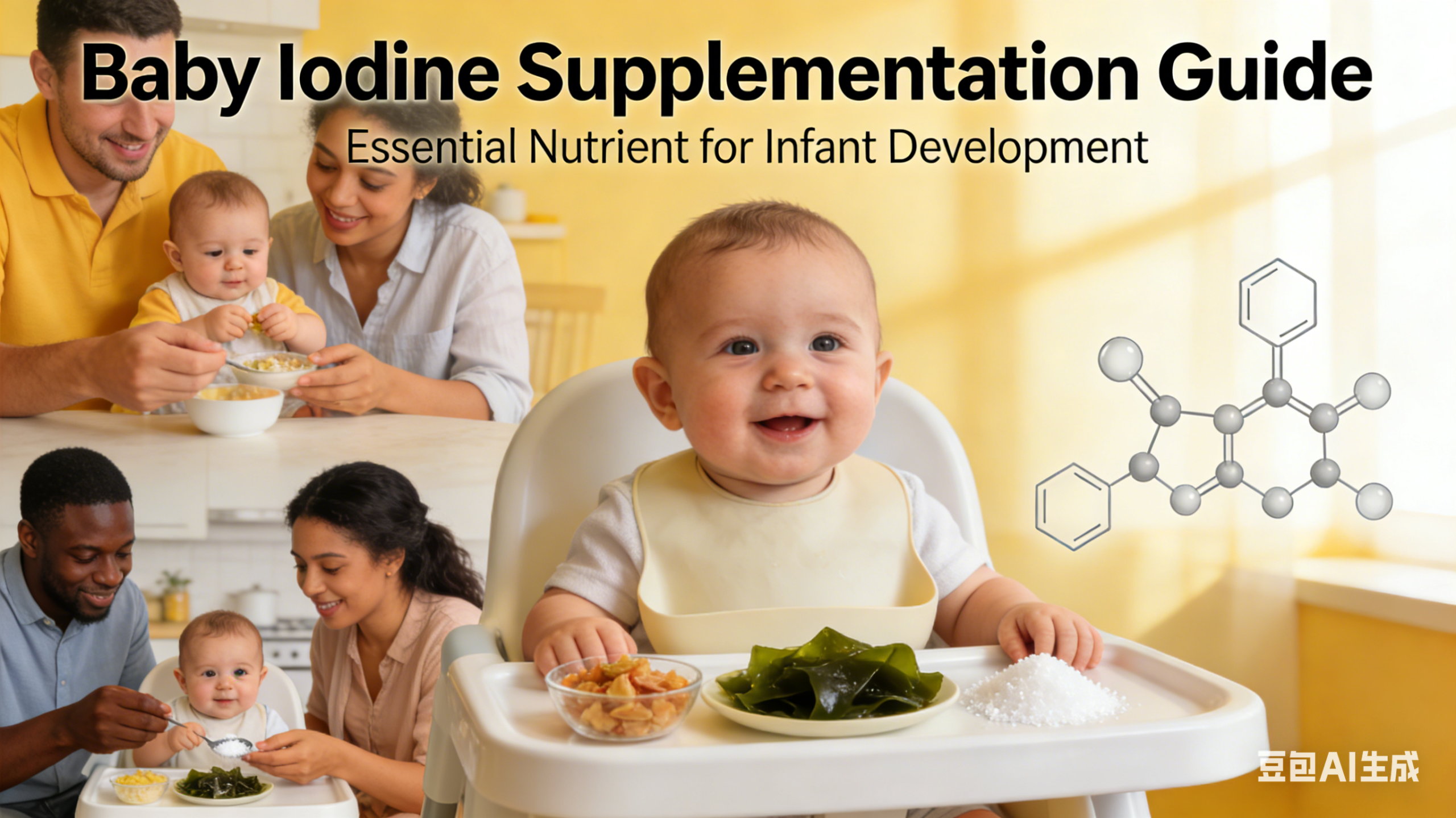




A Complete Guide to Infant Iodine Nutrition
Iodine is often called the “smart nutrient” for good reason—it is essential for your baby’s brain development and thyroid function. This guide provides evidence-based information on why iodine matters, how much your baby needs, and practical ways to ensure adequate intake through diet at every stage.
*Disclaimer: This information is for educational purposes only and does not replace professional medical advice. Always consult your health visitor, GP, or paediatrician for concerns about your baby.*
1. Why Iodine Matters for Babies
Iodine is a vital component of thyroid hormones (thyroxine T4 and triiodothyronine T3), which regulate metabolism and are critical for normal growth and neurological (brain) development .
Consequences of iodine deficiency in infancy:
– Irreversible impairment of neurodevelopment
– Increased risk of cognitive and psychomotor impairments
– Can cause language delays and reduced intellectual development
– Even mild deficiency may affect attention and memory
Critical window: From fetal development through the first 3 years of life, the brain undergoes rapid development, making adequate iodine essential during this period . Requirements per kg bodyweight for iodine and thyroid hormone during infancy are higher than at any other time in the life cycle .
2. Iodine Requirements by Age
| Age Group | Recommended Iodine Intake | Notes |
|---|---|---|
| 0-6 months | 85 mcg/day (Adequate Intake) | All from breastmilk or formula |
| 7-12 months | 115 mcg/day (Adequate Intake) | From milk + complementary foods |
| 13-24 months | 90 mcg/day (Recommended Intake) | From family foods + small amounts iodized salt |
| Preterm infants | 30 mcg/kg daily | Higher requirements |
For breastfeeding mothers: Recommended intake is **290 mcg/day** (US guidelines) or **250 mcg/day** (WHO) to ensure adequate iodine in breastmilk . The American Thyroid Association recommends breastfeeding women take a daily supplement containing **150 mcg of iodine** .
3. How Babies Get Iodine: A Stage-by-Stage Guide
0-6 Months: Exclusively Breastfed or Formula-Fed
Breastfed babies:
– Get iodine entirely from breastmilk
– Breastmilk iodine concentration should ideally be **100-200 mcg/L** to meet infant needs
– Maternal iodine intake directly affects breastmilk levels
– A study found significant positive association between maternal iodine intake and human milk iodine concentration
For breastfeeding mothers:
– Use iodized salt in cooking
– Consume iodine-rich foods (dairy, seafood)
– Take a prenatal/postnatal supplement containing **150 mcg iodine** daily
– Vegan/vegetarian mothers are at higher risk of deficiency and should use supplements
Formula-fed babies:
– Infant formula in the UK and many countries is **fortified with iodine**
– UK regulations require iodine in all infant formula
– Check labels to ensure formula provides adequate iodine
– Formula-fed babies generally receive sufficient iodine if consuming appropriate amounts
7-12 Months: Introducing Solids
During the weaning period, infants are at particular risk for iodine deficiency for several reasons :
– No added salt (iodized or not) is recommended in the first year
– Cow’s milk (a major iodine source in many countries) is not recommended as a drink before 12 months
– Iron deficiency (common in infancy) can impair iodine metabolism
Iodine-rich first foods:
| Food | Preparation | Frequency |
|---|---|---|
| Fish (white fish, salmon, tuna) | Cooked, flaked, bones removed | 1-2 portions weekly |
| Yoghurt (full-fat, plain) | As part of meals from 6 months | Can be offered regularly |
| Fish cakes (homemade) | Mashed fish with potato | Occasional |
| Commercial baby foods | Some are iodine-fortified | Check labels |
Important: In Switzerland, research found that weaning infants not receiving iodine-containing commercial baby foods had inadequate iodine intakes, even in a country with effective iodized salt programs .
12-24 Months: Transition to Family Foods
At this stage, toddlers can begin to eat modified family meals and small amounts of iodized salt.
Practical tips:
– Use iodized salt in family cooking (but add minimal salt to toddler portions)
– Offer 2-3 portions of dairy daily (milk, yoghurt, cheese)
– Include 2 portions of fish weekly, including one oily fish (salmon, mackerel, sardines)
– Introduce seaweed products occasionally but cautiously (see precautions below)
4. Iodine-Rich Foods: A Practical Guide
| Food Category | Examples | Iodine Content | Notes |
|---|---|---|---|
| Dairy products | Cow’s milk, yoghurt, cheese | Good source; varies by season and farming practices | In many countries, dairy is a major iodine source |
| Fish and seafood | Cod, haddock, salmon, tuna, prawns, mussels, oysters | Excellent source | Offer 1-2 portions weekly |
| Seaweed | Sushi rolls, nori snacks, kelp | Very high—variable | Use with caution—content varies wildly |
| Bread | Commercial bread made with iodized salt | Good source in countries with mandatory fortification | Check if UK bread contains iodized salt (not universal) |
| Iodized salt | Table salt labelled “iodized” | High | Tiny amounts only after 12 months |
| Eggs | Whole eggs | Moderate | Yolk contains most iodine |
| Commercial infant foods | Some brands add iodine | Check labels | Useful during weaning |
Caution with seaweed:
– Dried seaweed (kelp) can contain extremely high and variable iodine levels
– Dry kelp: up to 36,240 mcg/100g—far exceeding infant needs
– Regular consumption can cause iodine excess, which is also harmful
– Occasional sushi or nori snacks are generally fine in small amounts
5. Practical Feeding Strategies by Age
For babies 6-9 months:
Iodine-focused meal ideas:
– Mashed sweet potato with flaked cooked fish
– Plain full-fat yoghurt with pureed fruit
– Fish pie (mashed fish with potato and vegetables)
– Commercial baby food labelled with iodine
For babies 9-12 months:
– Fish cakes: Homemade with mashed potato and flaked salmon or cod
– Fish pasta: Flaked fish mixed with well-cooked pasta and vegetable puree
– Yoghurt pots: Plain yoghurt with soft fruit
– Finger foods: Soft cooked fish fillet strips (check for bones)
For toddlers 12-24 months:
– Fish fingers (homemade or low-salt shop-bought)
– Tuna pasta with sweetcorn
– Egg muffins with vegetables
– Yoghurt with fruit
– Milk as a drink (300-400ml daily)
– Cheese sticks or cubes
– Sushi rolls (plain fish or vegetable) as an occasional treat
6. Iodine and Formula Feeding
Important facts:
– UK regulations require iodine in infant formula
– Standard formula provides adequate iodine if consumed in appropriate amounts
– Follow-on formula also contains iodine but is not necessary if baby is eating well
– Always prepare formula according to instructions—over-diluting reduces nutrient intake
For partially breastfed babies:
– Combination feeding means baby gets iodine from both sources
– Maternal iodine intake remains important
7. Iodized Salt: What You Need to Know
Key points about salt and babies:
– No added salt for babies under 12 months
– After 12 months, **tiny amounts** of iodized salt can be used in cooking
– Daily limit for toddlers: less than 1g salt (about 0.4g sodium)
– Iodized salt is the cornerstone of iodine prophylaxis worldwide
For family meals:
– Use iodized salt in family cooking
– Add salt at the end of cooking (preserves iodine content)
– Store iodized salt in a sealed, dark container away from heat
**UK note:** Not all table salt in the UK is iodized. Check labels for “iodized salt.”
8. Signs of Iodine Deficiency
What to watch for:
– Developmental delay (slower to reach milestones)
– Lethargy or low energy
– Poor feeding
– Constipation
– Dry skin
– If concerned, speak to your health visitor or GP
Diagnosis: Iodine deficiency is diagnosed through:
– Urinary iodine concentration tests
– Thyroid function tests
– Clinical assessment
9. Iodine Excess: Can Babies Get Too Much?
Yes—excess iodine is also harmful.
Safe upper limits for infants:
– Much higher than requirements, so moderate intake from food is safe
– Risk comes from excessive seaweed consumption or high-dose supplements
– Sustained intake exceeding 500-1100 mcg daily during lactation should be avoided
Signs of excess:
– Thyroid dysfunction (can be temporary)
– Detected through newborn screening in some cases
Seaweed precautions:
– Avoid giving large amounts of kelp or seaweed products
– Occasional small amounts (e.g., in sushi) are fine
– Do not use seaweed as a regular iodine source
10. Special Considerations
| Situation | Recommendation |
|---|---|
| Vegan/vegetarian families | Higher risk of deficiency; ensure supplements used |
| Mothers with thyroid conditions | Consult doctor before taking iodine supplements |
| Coeliac disease or lactose intolerance | May affect iodine absorption; seek individual advice |
| Preterm infants | Higher iodine requirements (30 mcg/kg/day) |
| Families not using iodized salt | Ensure other iodine sources (dairy, fish) are adequate |
11. Practical Summary: Iodine Checklist
| Age | Primary Sources | Key Action |
|---|---|---|
| 0-6 months (breastfed) | Breastmilk | Mother takes 150 mcg iodine supplement daily + eats iodine-rich foods |
| 0-6 months (formula-fed) | Formula | Ensure formula is iodine-fortified (all UK formula is) |
| 6-12 months | Breastmilk/formula + iodine-rich solids | Introduce fish, yoghurt; consider iodine-fortified baby foods |
| 12-24 months | Family foods + small amount iodized salt | Offer 2 portions fish/week, 2-3 dairy portions/day; use iodized salt in cooking |
12. When to Seek Help
Contact your health visitor or GP if:
– Your baby shows signs of developmental delay
– You’re concerned about your baby’s growth or feeding
– Your family follows a restricted diet (vegan, dairy-free)
– You have questions about supplements
**UK resources:**
– Health visitor (free for all families)
– GP or paediatrician
– Registered dietitian (via NHS or private)
– First Steps Nutrition Trust: www.firststepsnutrition.org
Summary Table: Iodine Recommendations at a Glance
| Group | Daily Iodine Requirement | Key Sources |
|---|---|---|
| Infants 0-6 months | 85 mcg | Breastmilk (if mother iodine-sufficient) or fortified formula |
| Infants 7-12 months | 115 mcg | Milk + fish, yoghurt, iodine-fortified foods |
| Children 1-3 years | 90 mcg | Family diet with dairy, fish, iodized salt |
| Breastfeeding mothers | 250-290 mcg | Iodized salt, dairy, seafood, plus 150 mcg supplement |
*References available upon request. Key sources: CDC , Qingdao CDC , PubMed studies , WHO .*
a.本站所有文章,如无特殊说明或标注,均为本站原创发布。
b.任何个人或组织,在未征得本站同意时,禁止复制、盗用、采集、发布本站内容到任何网站、书籍等各类媒体平台。
c.如若本站内容侵犯了原著者的合法权益,可联系我们进行处理。






No comments yet