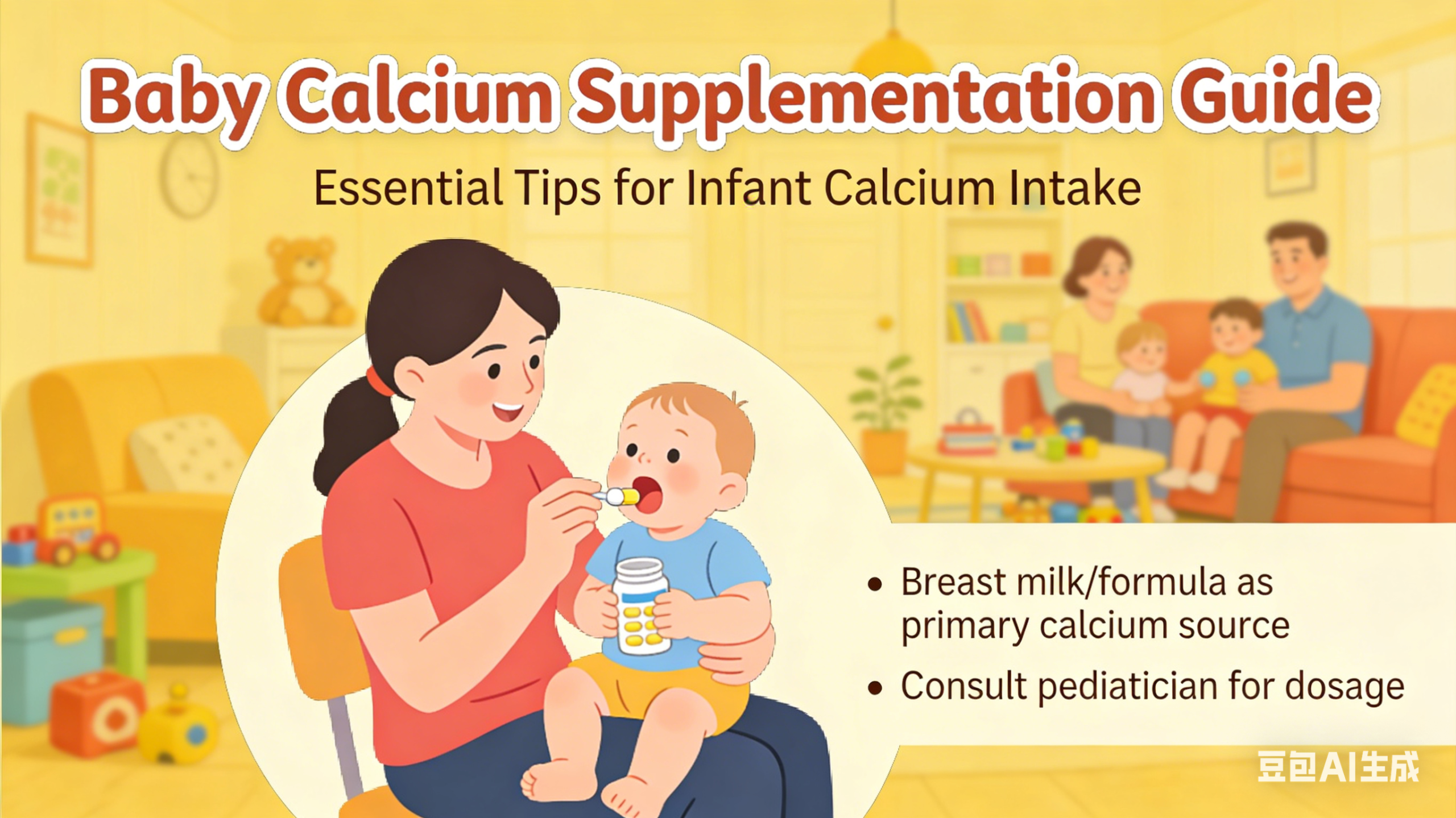




A Complete Guide to Infant Calcium
Calcium is the most abundant mineral in the body, with approximately 99% stored in bones and teeth . It is essential for bone development, nerve function, muscle contraction, and blood clotting . This guide provides evidence-based information on calcium requirements, dietary sources, supplementation, and common misconceptions.
*Disclaimer: This information is for educational purposes only and does not replace professional medical advice. Always consult your health visitor, GP, or paediatrician for concerns about your baby.*
1. Why Calcium Matters for Babies
Critical functions:
– Builds strong bones and teeth (99% of body calcium is in the skeleton)
– Supports nerve transmission and muscle function
– Essential for blood clotting and hormone release
– Helps achieve optimal peak bone mass—a prerequisite for preventing osteoporosis later in life
Bone mass accretion during the first year of life is equal to or greater than that achieved at any other stage, including adolescence . Optimising calcium status in infancy has both immediate benefits (preventing rickets and osteopenia) and long-term benefits (reaching genetic potential for peak bone mass) .
2. Calcium Requirements by Age
| Age Group | Daily Calcium Requirement (UK) | Daily Calcium Requirement (China, 2023) |
|---|---|---|
| 0-6 months | 525 mg | 200-250 mg (AI) |
| 7-12 months | 525 mg | 250-600 mg |
| 1-3 years | 350 mg | 600 mg |
| 4-6 years | 450 mg | 650 mg |
Note: The UK figures represent the Reference Nutrient Intake (RNI). The difference in figures for infants reflects different assessment methodologies rather than true differences in physiological requirements.
Calcium requirements are higher during infancy and adolescence than during mid-childhood.
3. How Babies Get Calcium: A Stage-by-Stage Guide
0-6 Months: Exclusively Breastfed or Formula-Fed
Breastfed babies:
– Breast milk contains approximately 30-35 mg calcium per 100 ml
– If baby consumes 600-700 ml breast milk daily, calcium needs are met
– However, breast milk calcium content is not affected by maternal intake—maternal calcium is prioritised for milk production
Formula-fed babies:
– Infant formula is fortified with calcium to meet requirements
– Formula typically contains slightly higher calcium than breast milk
– If consuming adequate volumes, formula-fed babies receive sufficient calcium
Key point: In normal circumstances, breast milk and formulas supply sufficient amounts of calcium for healthy term infants .
7-12 Months: Introducing Solids
During weaning, milk remains the primary calcium source, but solids become increasingly important.
Recommended milk intake: 600-800 ml daily (breast milk or formula) .
First foods rich in calcium:
– Full-fat yoghurt (plain, unsweetened)
– Cheese (pasteurised, full-fat)
– Tofu (calcium-set varieties contain 320-500 mg per 100g)
– Leafy green vegetables: kale (150 mg per 100g), spring greens (60 mg per 80g), broccoli (32 mg per 80g)
– Fortified baby cereals (check labels)
1-3 Years: Transition to Family Foods
Milk intake: 300-400 ml daily (whole cow’s milk from 1 year) . Some sources recommend 500-600 ml for 1-3 year olds to ensure adequate calcium .
Calcium-rich foods to offer regularly:
– 2-3 portions of dairy daily (milk, yoghurt, cheese)
– Fortified plant-based alternatives (if using)
– Small amounts of nut butters (ensure age-appropriate texture to avoid choking)
– Tahini (136 mg calcium per 20g)
– Dried figs (100 mg calcium per 40g)
– Baked beans (78 mg per small tin)
4. Plant-Based Sources of Calcium
For families following vegan or dairy-free diets, calcium must come from other sources .
| Food Category | Examples | Calcium Content |
|---|---|---|
| Fortified plant milks | Soya, oat, almond, coconut (calcium-fortified) | 250-300 mg per 250ml |
| Tofu | Calcium-set tofu | 320-500 mg per 100g |
| Sesame seeds/tahini | Tahini paste | 136 mg per 20g |
| Dried fruit | Figs, apricots | 100 mg per 40g figs |
| Leafy greens | Kale, spring greens, okra | Kale: 150 mg per 100g |
| Pulses | Chickpeas, kidney beans, soya beans | Soya beans: 100 mg per 120g |
| Nuts | Almonds | 24 mg per 6 whole almonds |
| Bread | White, granary, wholemeal | 19-33 mg per slice |
Important: Choose unsweetened fortified plant milks and check labels for calcium content . Rice milk should not be given to children under 5 years due to arsenic levels .
5. Vitamin D: Calcium’s Essential Partner
Calcium absorption depends on adequate vitamin D .
Vitamin D requirements:
– All babies: **400 IU (10 mcg) daily** from birth to 1 year (breastfed)
– Formula-fed babies: Supplement if having less than 500 ml formula daily
– Children 1-5 years: Daily vitamin D supplement recommended (containing vitamins A, C, and D)
Sources of vitamin D:
– Sunlight (face and forearms exposed without sunscreen for short periods, April-September in UK)
– Fortified foods (spreads, breakfast cereals, plant milks)
– Supplements (recommended for all breastfed infants and children under 5)
Without adequate vitamin D, only 10-15% of dietary calcium is absorbed .
6. Should You Give Calcium Supplements?
General principle: Food first.
Most healthy children do not need calcium supplements if they consume adequate dairy or calcium-rich alternatives .
When supplements may be considered:
– Diagnosed deficiency (hypocalcemia confirmed by blood tests)
– Preterm infants with osteopenia or rickets
– Restricted diets (e.g., vegan, dairy-free) where dietary intake is insufficient despite best efforts
– Medical conditions affecting absorption (e.g., coeliac disease, inflammatory bowel disease)
If supplements are needed:
| Supplement Type | Characteristics | Notes |
|---|---|---|
| Calcium carbonate | 40% elemental calcium; requires stomach acid for absorption; may cause constipation | Cheaper; take with food |
| Calcium citrate | 21% elemental calcium; absorbed without food; better for those with low stomach acid | More expensive; fewer GI side effects |
Dosing: For preterm infants requiring supplementation, start at 20 mg/kg/day elemental calcium, increasing as tolerated to maximum 70-80 mg/kg/day .
Duration: Consider supplementing for 3 months while addressing dietary habits, then reassess .
7. Signs of Calcium Deficiency
In infants and children:
| Signs | Potential Indications |
|---|---|
| Muscle cramps or spasms | Hypocalcemia (low blood calcium) |
| Poor growth | Chronic insufficient intake |
| Delayed motor milestones | Severe deficiency |
| Bone pain or tenderness | Rickets (calcium ± vitamin D deficiency) |
| Fractures | Severely weakened bones |
| Dental problems | Late tooth eruption, enamel defects |
At-risk groups:
– Preterm infants (highest risk for osteopenia and rickets)
– Exclusively breastfed infants without vitamin D supplementation
– Children with restricted diets
– Children with malabsorption conditions
8. Common Myths and Truths
| Myth | Truth |
|---|---|
| “All children need calcium supplements” | Most children get enough calcium from diet if they consume adequate dairy or fortified alternatives . |
| “Drinking more milk is always better” | Excessive milk (>600-800 ml daily) can displace other foods and lead to iron deficiency. Follow age-appropriate recommendations . |
| “Bone broth is an excellent calcium source” | Bone broth contains minimal calcium. Dairy, fortified foods, and leafy greens are far superior sources. |
| “Calcium supplements are harmless” | Excessive calcium can cause constipation, kidney stones, and interfere with iron absorption. Stick to recommended amounts . |
| “Spinach is great for calcium” | Spinach contains oxalates that bind calcium, making it poorly absorbed. Choose low-oxalate greens like kale instead . |
| “If I take calcium while breastfeeding, my milk has more calcium” | Breast milk calcium content is tightly regulated by maternal physiology and does not increase with maternal intake. |
| “Vitamin D supplements are enough—I don’t need to worry about calcium” | Both are essential. Vitamin D helps absorb calcium, but calcium must be present in the diet . |
9. Common Questions Answered
Q: My baby refuses milk. How can I ensure adequate calcium?
A: Offer calcium-rich alternatives: yoghurt, cheese, calcium-set tofu, fortified plant yoghurts, kale, broccoli, and fortified cereals. Small, frequent portions work better than large amounts.
Q: Can I give my baby calcium-fortified orange juice?
A: Not recommended under 1 year (juice not advised). For toddlers, diluted juice (1 part juice to 10 parts water) with meals is acceptable, but whole fruit is preferable.
Q: Does my toddler need calcium if they drink formula?
A: Follow-on formula is not necessary after 12 months. Whole cow’s milk (300-400 ml daily) plus a balanced diet provides adequate calcium .
Q: My child is lactose intolerant. How do they get enough calcium?
A: Use lactose-free dairy (many lactose-intolerant individuals tolerate hard cheese and yoghurt), fortified plant milks, calcium-set tofu, leafy greens, and fortified cereals .
Q: Can too much calcium be harmful?
A: Yes. Upper limits are approximately 5 times the recommended intake . Excessive calcium can cause constipation, interfere with iron and zinc absorption, and rarely, kidney stones. Always follow age-appropriate guidelines.
Q: Do I need to worry about calcium if my baby is breastfed and I’m vegan?
A: Breast milk calcium is not affected by maternal diet (maternal bones provide calcium if needed). However, ensure **you** get adequate calcium (1,250 mg daily for breastfeeding mums) . After 6 months, introduce calcium-rich complementary foods .
Q: How do I maximise calcium absorption?
A:
– Ensure adequate vitamin D (supplements, sunlight)
– Avoid high-oxalate foods (spinach, rhubarb) with calcium-rich meals
– Limit salt (increases calcium loss in urine)
– Limit caffeine (tea, cola, coffee inhibit absorption)
– Include protein and lactose (both enhance absorption)
– Weight-bearing exercise strengthens bones
10. Practical Summary: Calcium Checklist
| Age | Primary Sources | Key Action |
|---|---|---|
| 0-6 months (breastfed) | Breast milk | Ensure adequate milk intake (600-700 ml daily) |
| 0-6 months (formula-fed) | Formula | Ensure adequate milk intake; formula provides sufficient calcium |
| 7-12 months | Milk + calcium-rich solids | 600-800 ml milk daily + yoghurt, cheese, tofu, greens |
| 1-3 years | Milk/dairy + varied diet | 300-500 ml milk daily + 2-3 dairy portions + calcium-rich foods |
| All ages | Vitamin D | Daily supplement (breastfed infants; all children under 5) |
11. When to Seek Help
Contact your health visitor, GP, or paediatrician if:
– Your baby has poor growth or feeding difficulties
– You’re concerned about bone health (fractures, bone pain)
– Your family follows a restricted diet and you need individual advice
– Your child has a medical condition affecting absorption
– You suspect calcium or vitamin D deficiency
Specialist referral may be needed for:
– Preterm infants with osteopenia
– Children with rickets (confirmed by blood tests and X-ray)
– Refractory hypocalcemia requiring intravenous therapy
Resources:
– NHS Start for Life: www.nhs.uk/start-for-life
– First Steps Nutrition Trust: www.firststepsnutrition.org
– British Dietetic Association: www.bda.uk.com
*References available upon request. Key sources: NHS Dorset , Beijing Jishuitan Hospital , PubMed studies , NHS Lanarkshire .*
a.本站所有文章,如无特殊说明或标注,均为本站原创发布。
b.任何个人或组织,在未征得本站同意时,禁止复制、盗用、采集、发布本站内容到任何网站、书籍等各类媒体平台。
c.如若本站内容侵犯了原著者的合法权益,可联系我们进行处理。







No comments yet