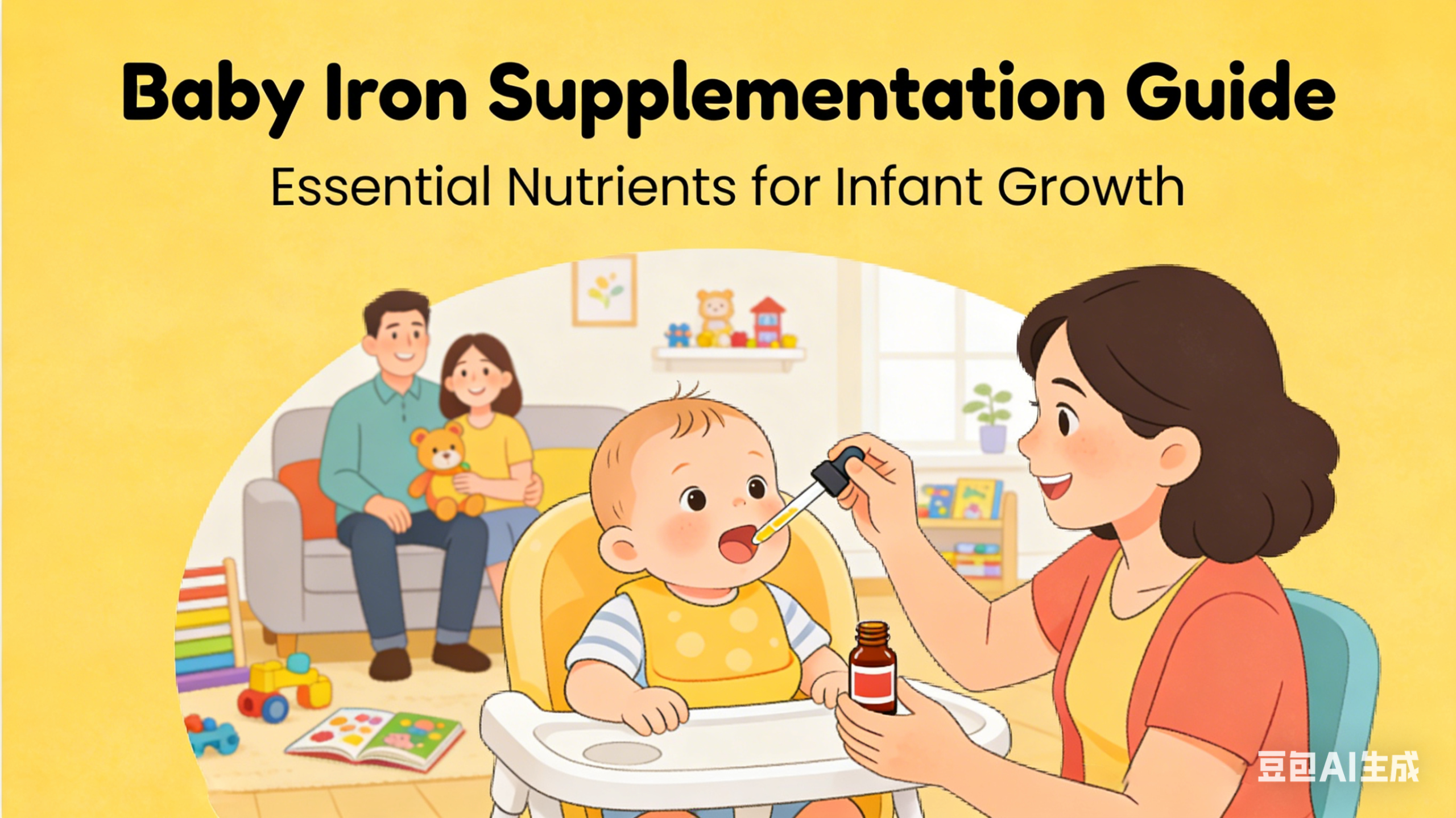




A Complete Guide to Infant Iron
Iron is an essential mineral that plays a critical role in your baby’s growth and development. This guide provides evidence-based information on dietary iron sources, supplementation indications, and common concerns such as stool changes during iron therapy.
*Disclaimer: This information is for educational purposes only and does not replace professional medical advice. Always consult your health visitor, GP, or paediatrician for concerns about your baby.*
1. Why Iron Matters for Babies
Iron is fundamental for multiple physiological processes:
– Brain development: Iron is essential for myelination (formation of the protective sheath around nerves) and neurotransmitter function. Iron deficiency in infancy can lead to permanent cognitive deficits, with studies showing potential IQ reductions of 5-8 points .
– Oxygen transport: Iron is a core component of haemoglobin, which carries oxygen from lungs to tissues.
– Immune function: Adequate iron supports normal immune system development.
– Energy metabolism: Iron-containing enzymes are involved in energy production.
Critical window: From fetal development through the first 3 years of life, the brain undergoes rapid development, making adequate iron essential during this period .
2. How Babies Get Iron: A Stage-by-Stage Guide
Birth to 4-6 Months: Building on Stores
Healthy term babies are born with sufficient iron stores (approximately 300 mg) to last the first 4-6 months of life .
– Breastfed babies: Breast milk contains low iron (approximately 0.3 mg/L) but is highly bioavailable. Exclusive breastfeeding provides adequate iron for the first 4-6 months.
– Formula-fed babies: Infant formula is fortified with iron to meet requirements. Standard formula provides adequate iron if consumed in appropriate volumes.
6-12 Months: The Critical Transition
By 6 months, iron stores are depleted, and breast milk alone cannot meet requirements . Complementary foods must provide iron.
Iron requirements: 7-12 months: approximately 11 mg/day (UK guidelines vary; WHO emphasises iron-rich complementary foods).
Iron-rich first foods:
| Food Category | Examples | Iron Content | Notes |
|---|---|---|---|
| Iron-fortified cereals | Baby oatmeal cereal | ≥6 mg per 100g | Mix with breastmilk or formula; rice cereal not recommended due to arsenic concerns |
| Red meat | Beef, lamb | 3 mg per 100g (beef) | Puree or mince finely; offer from 6 months |
| Liver | Chicken liver, beef liver | 8 mg per 100g (pig liver) | Limit to once weekly due to high vitamin A content |
| Dark poultry | Chicken thigh, turkey | Moderate | Dark meat contains more iron than white meat |
| Fish | Salmon, sardines (bones removed) | Moderate | Introduce from 6 months |
| Legumes | Lentils, chickpeas, kidney beans | 2-3 mg per 100g cooked | Puree or mash well |
| Leafy greens | Kale, spinach, broccoli | 1-2 mg per 100g | Spinach contains oxalates that reduce absorption; pair with vitamin C |
Key principle: Pair iron-rich foods with vitamin C to enhance absorption. Vitamin C can increase non-haem iron absorption by up to 3-fold .
Vitamin C-rich pairings:
– Red meat + mashed sweet potato
– Lentils + pureed bell peppers
– Iron-fortified cereal + pureed kiwi or orange segments (age-appropriate)
– Spinach + tomato puree
1-3 Years: Family Foods
Iron requirements: 1-3 years: approximately 7-8 mg/day (varies by guideline).
Practical strategies:
– Offer 2 portions of iron-rich foods daily
– Include meat, fish, or legumes in main meals
– Serve fruit or vegetables rich in vitamin C alongside iron sources
– Limit milk to 300-400 ml daily (excessive milk displaces iron-rich foods)
3. When to Consider Iron Supplements
General principle: Food first. Most healthy children can meet iron requirements through diet.
Indications for iron supplementation:
| Indication | Details |
|---|---|
| Diagnosed iron deficiency anaemia | Confirmed by blood tests (low haemoglobin + low ferritin) |
| Preterm or low birth weight infants | Higher iron requirements; often prescribed prophylactic iron from 2-4 weeks |
| Restricted diets | Vegan, vegetarian, or dairy-free diets require careful planning; supplements may be needed if dietary intake insufficient |
| Chronic conditions | Malabsorption (coeliac disease, inflammatory bowel disease), chronic infection |
| Excessive milk intake | >600 ml daily displacing iron-rich foods |
Screening recommendations: Experts recommend first anaemia screening between 9-12 months, followed by annual screenings from 1-5 years .
Universal prophylactic iron supplementation in healthy term infants is NOT supported by current evidence. Recent well-powered randomised controlled trials showed no effect on psychomotor development in infants at high or low risk of iron deficiency . Whether non-anaemic iron deficiency requires treatment remains uncertain .
4. Iron Supplementation: Types and Dosing
If supplements are prescribed, various formulations are available:
| Supplement Type | Characteristics | Notes |
|---|---|---|
| Ferrous sulfate | Most common; 20% elemental iron | May cause more gastrointestinal side effects |
| Ferrous fumarate | 33% elemental iron | Similar efficacy |
| Ferrous bisglycinate | Chelated form; better tolerated | May have fewer side effects |
| Iron polymaltose | Complex formulation | Less gastrointestinal irritation |
Dosing (therapeutic): For iron deficiency anaemia, typical dose is 3-6 mg elemental iron/kg/day, divided into 1-2 doses . Duration usually 3 months to replenish stores.
Safe upper levels: EFSA established safe supplemental iron intakes: 5 mg/day for infants 4-11 months (from fortified foods and supplements, not formula); 10 mg/day for children 1-3 years .
5. Why Does Iron Cause Black Stools?
The mechanism is well-established:
When iron supplements are taken orally, not all iron is absorbed by the body. The unabsorbed iron passes through the gastrointestinal tract and undergoes chemical reactions. In the large intestine, iron combines with sulfur to form ferrous sulfide—a black compound that colours the stool .
This is the only indicator for which a dose-response relationship could be established in safety assessments, reflecting the presence of large amounts of unabsorbed iron in the gut .
Key points:
– Black stools indicate unabsorbed iron, not iron toxicity
– This is a **normal, harmless** effect of iron supplementation
– It is not an adverse effect per se, but rather a marker of excess iron intake
– The effect is dose-dependent; higher doses produce darker stools
6. Is Black Stool Normal During Iron Supplementation?
Yes—completely normal and expected.
What to expect:
– Stools become dark green, dark grey, or black
– Colour change is uniform throughout the stool
– Consistency may be normal or slightly firmer
– Effect lasts throughout supplementation period
– Stools return to normal colour 2-3 days after stopping supplements
When to be concerned (red flags):
| Feature | Normal Iron Stool | Concerning (Seek Help) |
|---|---|---|
| Colour | Dark green to black, uniform | Bright red blood, maroon, or black with “coffee ground” appearance |
| Consistency | Normal or slightly firmer | Tarry, sticky, or mucus-streaked |
| Associated symptoms | None | Abdominal pain, vomiting, fever, poor feeding, lethargy |
| Timing | Throughout supplementation | Sudden onset with other symptoms |
Differential diagnosis: Black stools can also occur with:
– Upper gastrointestinal bleeding (requires urgent evaluation)
– Certain medications (bismuth subsalicylate)
– Foods (blueberries, liquorice, dark chocolate)
7. Other Side Effects of Iron Supplements
| Side Effect | Frequency | Management |
|---|---|---|
| Constipation | Common | Increase fluid intake, offer prunes/pears, ensure adequate fibre |
| Nausea/vomiting | Moderate | Give with food; consider divided doses |
| Abdominal discomfort | Moderate | May improve with continued use; try different formulation |
| Diarrhoea | Less common | Hydration; consult prescriber if persistent |
| Metallic taste | Common | Give with food; rinse mouth after dosing |
| Staining of teeth | With liquid preparations | Use straw, brush teeth after dosing, wipe gums |
Tips to minimise side effects:
– Give iron with food (but avoid calcium-rich foods simultaneously—calcium inhibits absorption)
– Start with lower dose, gradually increase
– Ensure adequate hydration
– For liquid iron, administer towards back of mouth and wipe gums
– Consider every-other-day dosing (some evidence suggests equal efficacy with fewer side effects)
8. Common Myths and Truths
| Myth | Truth |
|---|---|
| “Spinach is an excellent iron source” | Spinach contains oxalates that bind iron, making it poorly absorbed (1-2% absorption). Pair with vitamin C or choose low-oxalate greens . |
| “Black stools mean internal bleeding” | During iron supplementation, black stools are normal and expected—they indicate unabsorbed iron, not bleeding . |
| “All babies need iron supplements” | Universal prophylactic iron supplementation in healthy term infants is NOT supported by current evidence . |
| “Iron-fortified cereal is unnecessary” | Iron-fortified cereal is recommended as a first food because babies’ iron stores deplete by 6 months . |
| “Cooking in iron pots provides enough iron” | Cooking in iron pots can increase iron content but is insufficient alone; dietary sources remain essential. |
| “Dark stools mean the iron is working” | Stool colour reflects unabsorbed iron, not absorption. Clinical improvement is measured by blood tests and symptoms. |
| “Iron causes constipation in all babies” | Constipation is common but not universal; many babies tolerate iron without gastrointestinal issues. |
9. Practical Tips for Supplement Administration
For liquid iron preparations:
– Use the measuring device provided (not kitchen spoons)
– Give between meals for best absorption (but with food if GI side effects)
– Avoid giving with milk, calcium supplements, or antacids
– Administer with vitamin C-rich food/juice to enhance absorption
– Use a straw to minimise teeth staining
– Wipe gums/brush teeth after dosing
For powdered iron sachets (multiple micronutrient powders):
– WHO recommends in populations where anaemia prevalence ≥20% in children under 2 years
– Sprinkle onto semi-solid food just before eating
– Do not mix with liquids or heat
– Use one sachet daily as directed
Duration of treatment:
– Typically continue therapeutic doses for 3 months after anaemia correction to replenish stores
– Follow-up blood tests recommended to confirm resolution
– Do not stop early even if symptoms improve
10. When to Seek Help
Contact your health visitor, GP, or paediatrician if:
– Your baby shows signs of iron deficiency:
– Pallor (pale skin, inside lower eyelid)
– Fatigue, irritability
– Poor appetite
– Pica (eating non-food items like dirt, ice)
– Frequent infections
– Developmental delay
– During iron supplementation:
– Blood in stool (bright red or coffee-ground appearance)
– Severe abdominal pain
– Persistent vomiting
– Signs of allergic reaction (rash, swelling, difficulty breathing)
– No improvement after 4 weeks of treatment
– **Iron overdose suspected:** If your child ingests a large amount of iron supplement (more than prescribed), seek emergency care immediately. Iron overdose is toxic and potentially fatal.
Summary Table: Iron Supplementation at a Glance
| Aspect | Recommendation |
|---|---|
| Dietary approach | Iron-rich foods + vitamin C pairings from 6 months |
| When to supplement | Only if diagnosed deficiency or specific risk factors (preterm, restricted diets) |
| Therapeutic dose | 3-6 mg elemental iron/kg/day |
| Safe supplemental intake | Infants 4-11 months: ≤5 mg/day |
| Black stools | Normal—indicates unabsorbed iron |
| Treatment duration | Minimum 3 months to replenish stores |
| Follow-up | Repeat blood tests after treatment course |
Resources:
– NHS Start for Life: www.nhs.uk/start-for-life
– First Steps Nutrition Trust: www.firststepsnutrition.org
– British Dietetic Association: www.bda.uk.com
*References available upon request. Key sources: EFSA 2024 , WHO guidelines , Southeast Asia Consensus 2025 , recent paediatric research .*
a.本站所有文章,如无特殊说明或标注,均为本站原创发布。
b.任何个人或组织,在未征得本站同意时,禁止复制、盗用、采集、发布本站内容到任何网站、书籍等各类媒体平台。
c.如若本站内容侵犯了原著者的合法权益,可联系我们进行处理。







No comments yet