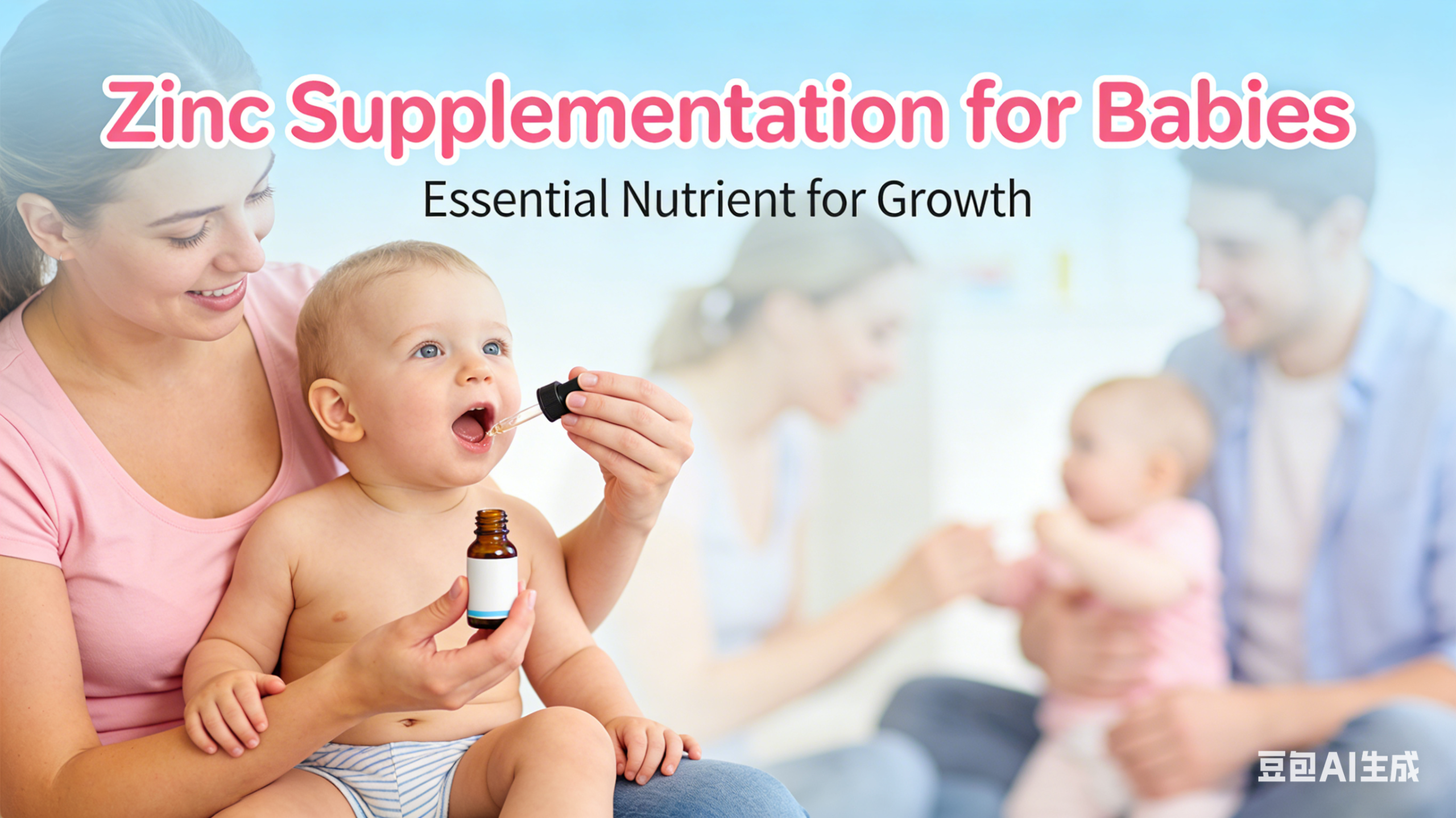




A Complete Guide to Infant Zinc
Zinc is an essential trace mineral that plays a fundamental role in your baby’s growth, development, and immune function. This guide provides evidence-based information on dietary zinc sources, the necessity of supplementation, and signs of deficiency to help you ensure your baby’s optimal health.
*Disclaimer: This information is for educational purposes only and does not replace professional medical advice. Always consult your health visitor, GP, or paediatrician for concerns about your baby.*
1. Why Zinc Matters for Babies
Zinc is the second most abundant trace mineral in the human body after iron and is involved in numerous physiological processes .
Critical functions:
– Growth and development: Zinc is essential for cellular proliferation, DNA synthesis, and protein synthesis, making it crucial for normal physical growth .
– Immune function: Zinc plays a key role in the development and function of the immune system, helping protect against infections .
– Neurological development: Zinc is involved in brain development and cognitive function during infancy and childhood .
– Wound healing: Zinc supports tissue repair and skin integrity .
– Enzymatic reactions: Zinc serves as a cofactor for over 1000 enzymatic reactions in the body .
Critical window: Infancy is a time of relatively high zinc requirements due to rapid growth and development . Adequate zinc intake during this period is essential for achieving optimal growth and neurodevelopment.
2. Zinc Requirements by Age
| Age Group | Daily Zinc Requirement (RDA) |
|---|---|
| Infants 0-6 months | 2 mg* (Adequate Intake) |
| Infants 7-12 months | 3 mg |
| Children 1-3 years | 3 mg |
Breast milk provides approximately 2 mg zinc per day for the first 4-6 months .
Zinc absorption: Meta-analysis reveals that infants have a mean fractional zinc absorption of approximately 26.75%, with variations associated with the transition from milk-based diets to solid foods during the first 3 years of life .
3. How Babies Get Zinc: A Stage-by-Stage Guide
0-6 Months: Breastfeeding and Formula
Breastfed babies:
– Human milk provides an excellent source of highly bioavailable zinc and generally meets the needs of healthy, exclusively breastfed infants for the first several months of life .
– Breast milk contains a zinc-binding enzyme that helps babies absorb zinc through the intestine .
– However, zinc intake from human milk alone may become limiting by around 6 months of age .
– Exceptions may be small for gestational age and low birth weight infants, who may benefit from increased zinc intake before 6 months .
Formula-fed babies:
– Infant formula is fortified with zinc to meet requirements.
– Formula-fed babies generally receive adequate zinc if consuming appropriate volumes.
6-12 Months: The Critical Transition
By 6 months, breast milk alone cannot meet zinc requirements, and the older infant becomes dependent on non-human milk sources of zinc from complementary foods .
Zinc-rich first foods :
| Food Category | Examples | Zinc Content | Notes |
|---|---|---|---|
| Meat and poultry | Beef, lamb, chicken, turkey | Beef: 3.8 mg per 3 ounces | Meats should be considered as an early complementary food to provide essential micronutrients |
| Liver | Beef or chicken liver | High concentration | Introduce in small amounts |
| Seafood | Oysters, sardines | Oysters: 28.2 mg per 3 ounces | Ensure fully cooked and age-appropriate texture |
| Eggs | Whole eggs | 0.6 mg per large egg | Introduce from 6 months |
| Legumes | Lentils, beans, chickpeas | Lentils: 1.3 mg per ½ cup | Combine with vitamin C for better absorption |
| Nuts and seeds | Pumpkin seeds, almonds | Pumpkin seeds: 2.2 mg per ounce | Nut butters only (whole nuts are choking hazard) |
| Dairy | Cheese, yogurt | Cheddar: 1.5 mg per 1.5 ounces | Full-fat, pasteurised only |
| Fortified cereals | Baby cereals | Varies by brand | Check labels for zinc content |
Important considerations:
– Traditional early complementary foods such as cereals, fruits, and vegetables provide very modest amounts of zinc .
– Plant-based foods (grains, legumes) contain phytate, which binds zinc and reduces its bioavailability .
– Meats and liver have greater zinc concentrations than unfortified plant foods and have been shown to have good acceptance by 7-month-old infants .
For vegetarian families:
– Vegetarian diets are lower in zinc than nonvegetarian diets .
– Legumes and whole grains contain phytates that interfere with zinc absorption.
– Vegetarians might need as much as 50% more of the RDA than nonvegetarians .
– Ensure adequate intake of zinc-rich plant foods and consider fortified options.
4. Is It Necessary to Supplement Zinc?
General principle: Food first.
Most healthy children can meet zinc requirements through a balanced diet that includes adequate animal products or carefully planned plant-based sources.
When zinc supplementation may be necessary:
| Indication | Details |
|---|---|
| Diagnosed zinc deficiency | Confirmed by clinical assessment and low plasma zinc levels (<70 μg/dl fasting serum zinc) |
| Preterm or low birth weight infants | Higher zinc requirements; may benefit from supplementation before 6 months |
| Exclusive breastfeeding beyond 6 months without adequate complementary foods | Risk of deficiency increases after 6 months |
| Malabsorption conditions | Celiac disease, cystic fibrosis, inflammatory bowel disease, short bowel syndrome |
| Chronic diarrhea | Increased zinc losses |
| Acrodermatitis enteropathica | Rare genetic disorder affecting zinc absorption; requires lifelong supplementation |
| Restricted diets | Vegan, vegetarian, or ketogenic diets without careful planning |
| Conditions with increased requirements | Burns, severe trauma, nephrotic syndrome |
Universal prophylactic zinc supplementation** in healthy term infants is not routinely recommended in developed countries with adequate dietary resources, though it may be indicated in populations where zinc deficiency is prevalent .
Zinc supplementation dosing :
– For treatment of deficiency: 1-3 mg elemental zinc/kg/day orally until symptoms resolve
– For acrodermatitis enteropathica: Lifelong supplementation required
– Always use supplements as prescribed by a healthcare professional
5. Signs and Symptoms of Zinc Deficiency
Zinc deficiency can manifest in various ways, ranging from mild to severe .
| System | Signs and Symptoms |
|---|---|
| Growth | Growth retardation, poor weight gain, height below同龄 children |
| Skin | Dry skin, dermatitis (especially around mouth, eyes, nose, perineum), skin sores, delayed wound healing, acrodermatitis enteropathica (psoriasiform dermatitis) |
| Hair | Hair loss (alopecia), thinning hair |
| Appetite | Anorexia (poor appetite), decreased food intake |
| Taste and smell | Impaired taste (hypogeusia), reduced smell sensation |
| Immune function | Frequent infections, recurrent colds/pneumonia, impaired immunity |
| Neurological | Lethargy, irritability, impaired cognitive development, attention difficulties |
| Gastrointestinal | Diarrhea (may occur with severe deficiency) |
| Vision | Night blindness (due to vitamin A metabolism impairment) |
| Reproductive | Delayed sexual maturation |
Severe deficiency presentations :
Acrodermatitis enteropathica:
– Rare autosomal recessive disorder
– Symptoms appear when breastfed infant is weaned
– Characterised by: Psoriasiform dermatitis around eyes, nose, mouth, perineum, and extremities; alopecia; diarrhea; growth retardation; recurrent infections
– Dramatic response to zinc supplementation
Transient neonatal zinc deficiency:
– May occur in exclusively breastfed infants due to low maternal zinc
– Presents with similar skin lesions
– Responds well to zinc supplementation
6. Risk Factors for Zinc Deficiency
| Category | Risk Factors |
|---|---|
| Dietary | Low maternal zinc diet in breastfed infants, vegan/vegetarian diets without planning, ketogenic diet, malnutrition, food faddism |
| Malabsorption | Acrodermatitis enteropathica, cystic fibrosis, celiac disease, inflammatory bowel disease, short bowel syndrome, high phytate intake |
| Increased losses | Acute/chronic diarrhea, post-surgical intestinal fistulas, nephrotic syndrome, diuretics, burns, excessive sweating |
| Increased requirements | Preterm infants, IUGR/SGA infants, pregnancy/lactation, hypercatabolic states |
| Medical conditions | Down syndrome, diabetes, liver disease, alcoholism |
7. Common Myths and Truths
| Myth | Truth |
|---|---|
| “All babies need zinc supplements” | Most healthy babies get enough zinc from breast milk/formula plus appropriate complementary foods. Supplementation is only needed for diagnosed deficiency or specific risk factors. |
| “Plant-based diets provide enough zinc easily” | Plant foods contain phytates that reduce zinc absorption. Vegetarian/vegan diets require careful planning and may need up to 50% higher intake . |
| “Zinc from cereals is sufficient” | Cereals provide modest zinc and often have high phytate-to-zinc ratios, reducing bioavailability. Meat is superior for meeting zinc requirements . |
| “Breast milk alone is enough after 6 months” | By around 6 months, breast milk alone cannot meet zinc requirements. Complementary foods rich in zinc are essential . |
| “Zinc deficiency is rare” | Globally, zinc deficiency affects nearly 20% of the population, and in some low/middle-income countries, almost half of children may be deficient . |
| “If my child eats well, they can’t be zinc deficient” | Even with adequate food intake, absorption issues (high phytate diets, malabsorption) can lead to deficiency . |
8. Maximising Zinc Absorption
Factors that enhance zinc absorption:
– Animal proteins: Meat, fish, and poultry enhance zinc bioavailability .
– Red wine and lactose: Aid in zinc absorption .
– Adequate protein intake: Supports overall mineral metabolism.
Factors that reduce zinc absorption :
– Phytates: Found in whole grains, legumes, nuts, and seeds; bind zinc and reduce absorption.
– High fibre intake: Can interfere with mineral absorption.
– Iron and copper supplements: High doses may compete with zinc for absorption (take at different times if prescribed).
– Calcium: Very high calcium intake may interfere (rare with normal dietary intake).
Practical tips:
– Pair zinc-rich foods with animal protein to enhance absorption.
– Soak, sprout, or ferment legumes and grains to reduce phytate content.
– Avoid giving zinc supplements with high-calcium meals.
– Space high-dose iron and zinc supplements by at least 2 hours.
9. When to Seek Help
Contact your health visitor, GP, or paediatrician if your baby:
– Shows signs of poor growth or failure to thrive
– Has persistent skin rashes, especially around mouth or nappy area
– Experiences recurrent infections
– Has unexplained hair loss
– Shows poor appetite or feeding difficulties
– Has chronic diarrhoea
– Follows a restricted diet and you have concerns about nutritional adequacy
For diagnosed zinc deficiency, treatment typically involves :
– Oral zinc supplements (1-3 mg/kg/day elemental zinc)
– Addressing underlying causes
– Dietary counselling to ensure adequate zinc-rich foods
– Follow-up monitoring of zinc levels and clinical response
Prognosis: With early treatment, mild zinc deficiency can be reversed, and symptoms resolve . Severe or prolonged deficiency may have lasting effects on growth and development.
Summary Table: Zinc at a Glance
| Aspect | Recommendation |
|---|---|
| Daily requirement (7-12 months) | 3 mg |
| Best food sources | Oysters, beef, liver, pumpkin seeds, lentils, cheese, eggs |
| When supplementation needed | Diagnosed deficiency, preterm infants, malabsorption, acrodermatitis enteropathica |
| Deficiency signs | Growth retardation, skin lesions, hair loss, poor appetite, frequent infections, irritability |
| Absorption enhancers | Animal protein, lactose |
| Absorption inhibitors | Phytates (whole grains, legumes), high-dose iron/copper |
| Treatment dose | 1-3 mg/kg/day elemental zinc |
**Resources:**
– NHS Start for Life: www.nhs.uk/start-for-life
– First Steps Nutrition Trust: www.firststepsnutrition.org
– British Dietetic Association: www.bda.uk.com
*References available upon request. Key sources: NIH/PubMed , PMC , Brigham and Women‘s Hospital , MSD Manuals , PKU Children’s Hospital .*
a.本站所有文章,如无特殊说明或标注,均为本站原创发布。
b.任何个人或组织,在未征得本站同意时,禁止复制、盗用、采集、发布本站内容到任何网站、书籍等各类媒体平台。
c.如若本站内容侵犯了原著者的合法权益,可联系我们进行处理。






No comments yet