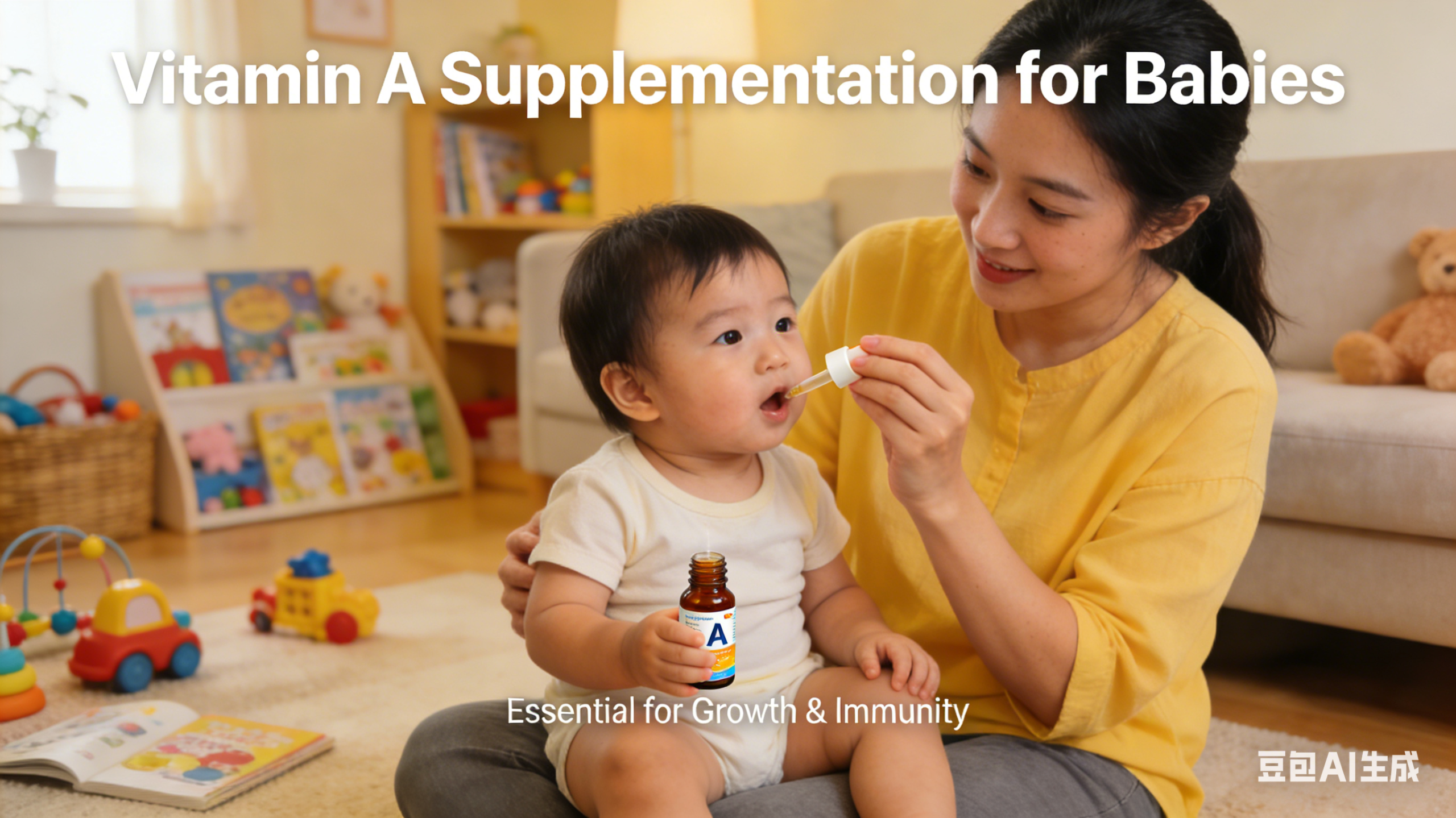




A Complete Guide to Infant Vitamin A
Vitamin A is an essential fat-soluble vitamin that plays a critical role in your baby’s vision, immune function, growth, and development. This guide provides evidence-based information on dietary sources, the necessity of supplementation, and the consequences of deficiency.
*Disclaimer: This information is for educational purposes only and does not replace professional medical advice. Always consult your health visitor, GP, or paediatrician for concerns about your baby.*
1. Why Vitamin A Matters for Babies
Vitamin A is essential for multiple physiological processes in infancy:
– Vision: Vitamin A is a component of rhodopsin, a protein in the eyes that allows vision in low light. Deficiency is a leading cause of preventable childhood blindness .
– Immune function: Vitamin A supports the development and function of immune cells and helps maintain the integrity of mucosal barriers (respiratory, intestinal), reducing susceptibility to infections .
– Growth and development: Vitamin A is required for cell division, bone growth, and normal development .
– Reproduction and metabolism: It plays roles in gene expression and red blood cell production .
Global burden: Vitamin A deficiency affects an estimated 190 million preschool-age children worldwide, mostly in Africa and South-East Asia . Inadequate intakes can increase the risk of illness and death from childhood infections, including measles and diarrhoeal diseases .
2. How to Get Vitamin A Through Diet
Vitamin A exists in two forms in foods: **preformed vitamin A (retinol)** from animal sources and **provitamin A carotenoids** (e.g., beta-carotene) from plant sources, which the body converts to retinol .
Animal Sources (Preformed Vitamin A)
These provide the most bioavailable form—retinoids have 75-100% absorption .
| Food Source | Preparation for Babies |
|---|---|
| Liver (chicken, beef) | Puree well; limit to once weekly due to high vitamin A content |
| Egg yolk | Cooked, mashed; introduce from 6 months |
| Full-fat dairy (yoghurt, cheese) | Pasteurised, full-fat only |
| Fish (salmon, sardines) | Cooked, flaked, bones removed |
| Butter | Small amounts in cooking |
Note: Liver is exceptionally rich in vitamin A—just 5g of pork liver daily can meet a 1-year-old’s vitamin A needs .
Plant Sources (Provitamin A Carotenoids)
Carotenoid absorption varies greatly depending on the food matrix and type of carotenoid . The CDC estimates a 12:1 ratio of beta-carotene to retinol absorption in mixed diets .
| Food Category | Examples | Preparation |
|---|---|---|
| Orange/yellow vegetables | Carrots, sweet potato, pumpkin, butternut squash | Steam, puree or mash |
| Dark leafy greens | Kale, spinach, broccoli, spring greens | Cook well, puree (spinach in moderation) |
| Orange fruits | Mango, apricots, cantaloupe melon | Puree fresh or cooked |
| Red vegetables | Red bell peppers | Cooked, pureed |
Maximising absorption:
– Cook and puree vegetables to break down cell walls
– Serve with a small amount of dietary fat (e.g., breastmilk, formula, or a teaspoon of oil) to enhance carotenoid absorption—vitamin A is fat-soluble
– Pair with iron-rich foods (vitamin A supports iron utilisation)
Breast Milk
Vitamin A (retinol and provitamin A carotenoids) is a normal component of human milk . Breast milk vitamin A concentration depends on maternal intake—deficiency is not uncommon, and maternal supplementation may be needed during lactation to achieve recommended intake .
3. Vitamin A Requirements by Age
| Age Group | Daily Vitamin A Requirement | Notes |
|---|---|---|
| Infants 0-6 months | 400 mcg (approx. 1333 IU) | From breast milk or formula |
| Infants 7-12 months | 400-500 mcg | From milk + complementary foods |
| Children 1-3 years | 300-600 mcg | Dietary sources + possible supplements |
| Breastfeeding mothers | 1300 mcg daily | To ensure adequate breast milk levels |
Minimum requirement: The minimum intake to prevent symptomatic deficiency in children 1-5 years is about 200 mcg/day .
4. Should You Give Extra Vitamin A Supplements?
General principle: For healthy, well-nourished infants in developed countries, dietary sources plus standard vitamin D supplements (which may contain vitamin A in combination products) are usually sufficient.**
When Supplementation Is Recommended
| Indication | Details |
|---|---|
| Populations with vitamin A deficiency | In settings where vitamin A deficiency is a public health problem (night blindness ≥1% in 24-59 month olds, or serum retinol ≤0.70 µmol/L in ≥20% of 6-59 month olds), high-dose vitamin A supplementation is recommended for infants and children 6-59 months . |
| China consensus (2024) | Chinese experts recommend daily vitamin A supplementation (1500-2000 IU, i.e., 450-600 mcg) from birth through at least 3 years, preferably combined with vitamin D . |
| UK approach (Healthy Start) | Children 6 months-5 years receive vitamins A, C, and D drops (containing 233 mcg vitamin A daily) as part of the government scheme. |
| Preterm or low birth weight infants | May have higher requirements; follow neonatologist guidance. |
| Malabsorption conditions | Coeliac disease, cystic fibrosis, liver disease, chronic diarrhoea may impair absorption. |
| Severe malnutrition | Children with eye signs of deficiency require therapeutic high-dose vitamin A under medical supervision (e.g., 50,000 IU for infants <6 months, 100,000 IU for 6-12 months, 200,000 IU for >12 months on days 1, 2, and 14) |
When Supplementation Is NOT Needed
– Healthy term infants receiving adequate breast milk (with good maternal nutrition) or standard infant formula
– Children consuming a varied diet rich in vitamin A foods (liver, eggs, dairy, orange vegetables)
– If already receiving a multivitamin containing vitamin A (do not double up)
Important safety note: Vitamin A is fat-soluble and accumulates in the liver . Excessive intake of preformed vitamin A can lead to toxicity .
5. Risks of Vitamin A Deficiency
Vitamin A deficiency can have serious consequences for infants and young children .
| System | Effects of Deficiency |
|---|---|
| Eyes (xerophthalmia) | Night blindness (earliest sign), conjunctival dryness, corneal dryness, corneal ulcers/scarring (keratomalacia), irreversible blindness |
| Immune system | Increased susceptibility to infections (measles, diarrhoeal diseases, respiratory infections) |
| Growth | Impaired growth, failure to thrive |
| Skin | Dry, rough skin (follicular hyperkeratosis) |
| Mortality | Increased risk of death from childhood infections |
| Haematological | Anaemia (vitamin A supports iron utilisation and red blood cell production) |
Mortality reduction: Clinical studies show that vitamin A supplementation reduces diarrhoea mortality by 28%, measles mortality by 20%, and respiratory infection mortality by 22% in deficient populations . It reduces diarrhoea incidence in under-5s by 15% .
Diagnosis: Deficiency is defined as serum retinol <20 mcg/dL (0.70 µmol/L). Ocular symptoms typically develop at concentrations <10 mcg/dL .
6. Vitamin A Toxicity: Too Much of a Good Thing
Excessive vitamin A intake can cause toxicity—this is why “more is not always better.”
Safe upper limits:
– Infants: Chronic intake >7500-15,000 mcg (25,000-50,000 IU) daily for 1-6 months can cause toxicity
– Children: Acute toxicity from single dose >90,000 mcg (300,000 IU); chronic toxicity from 7500-15,000 mcg (25,000-50,000 IU) daily for months
– The 2024 Chinese consensus confirms that standard preventive doses (1500-2000 IU daily) are safe, with no documented toxicity at these levels .
Signs of toxicity:
– Acute: Nausea, vomiting, headache, dizziness, blurred vision, bulging fontanelle in infants
– Chronic: Bone pain, dry skin, hair loss, cracked lips, liver damage, increased intracranial pressure
– Pregnancy: Excessive vitamin A (>4500 mcg/15,000 IU daily) can cause birth defects
Prevention: Never give high-dose vitamin A supplements unless prescribed by a healthcare professional. Avoid giving both vitamin AD drops and separate vitamin D drops simultaneously—choose one or alternate as advised.
7. Common Myths and Truths
| Myth | Truth |
|---|---|
| “All babies need extra vitamin A supplements” | In developed countries with adequate nutrition, most babies get enough from diet plus standard vitamin drops. Supplementation is targeted to deficient populations or individual risk factors . |
| “Carrots alone provide enough vitamin A” | Carotenoid absorption varies (12:1 conversion ratio), and plant sources alone may not meet requirements, especially in infants with limited variety . |
| “Liver should be avoided for babies” | Liver is excellent in small amounts (5g/day for toddlers). Limit to once weekly to avoid excess . |
| “Vitamin A supplements are dangerous” | In recommended preventive doses (450-600 mcg daily), they are safe and beneficial. Toxicity occurs only with excessive intake . |
| “If I take vitamin A while breastfeeding, my baby gets enough” | Maternal supplementation improves breast milk levels, but exclusively breastfed infants in the UK still receive vitamin A through Healthy Start drops from 6 months . |
| “Vitamin A prevents measles” | No—vitamin A does not prevent measles infection. Vaccination is the only effective prevention. However, therapeutic vitamin A reduces severity and complications in children with measles who are deficient . |
8. Practical Summary: Vitamin A Checklist
| Age | Primary Sources | Supplement Needed? |
|---|---|---|
| 0-6 months (breastfed) | Breast milk (depends on maternal diet) | In UK: No separate vitamin A until 6 months (Healthy Start drops start at 6 months). In China: Yes, 1500 IU daily from birth (combined with D) . |
| 0-6 months (formula-fed) | Standard infant formula (fortified) | No—formula provides adequate vitamin A. |
| 6-12 months | Breast milk/formula + vitamin A-rich solids (liver, egg yolk, orange veg) | UK: Yes (Healthy Start vitamins A, C, D). China: Yes (1500-2000 IU daily) . |
| 1-3 years | Family diet including liver, eggs, dairy, orange veg | Continue vitamin A-containing drops if diet limited or as per national guidance. |
| High-risk infants (preterm, malabsorption, chronic infection) | May require individualised supplementation under medical guidance. |
Key takeaway: Vitamin A is essential but requires balance—enough to prevent deficiency, not so much as to cause toxicity. Follow your country’s public health guidance and consult your healthcare provider for individualised advice.
Resources:
– NHS Start for Life: www.nhs.uk/start-for-life
– First Steps Nutrition Trust: www.firststepsnutrition.org
– World Health Organization: www.who.int
*References available upon request. Key sources: WHO 2023 guidelines , StatPearls , LactMed , Chinese consensus 2024 , CRN safety guidance .*
a.本站所有文章,如无特殊说明或标注,均为本站原创发布。
b.任何个人或组织,在未征得本站同意时,禁止复制、盗用、采集、发布本站内容到任何网站、书籍等各类媒体平台。
c.如若本站内容侵犯了原著者的合法权益,可联系我们进行处理。






No comments yet