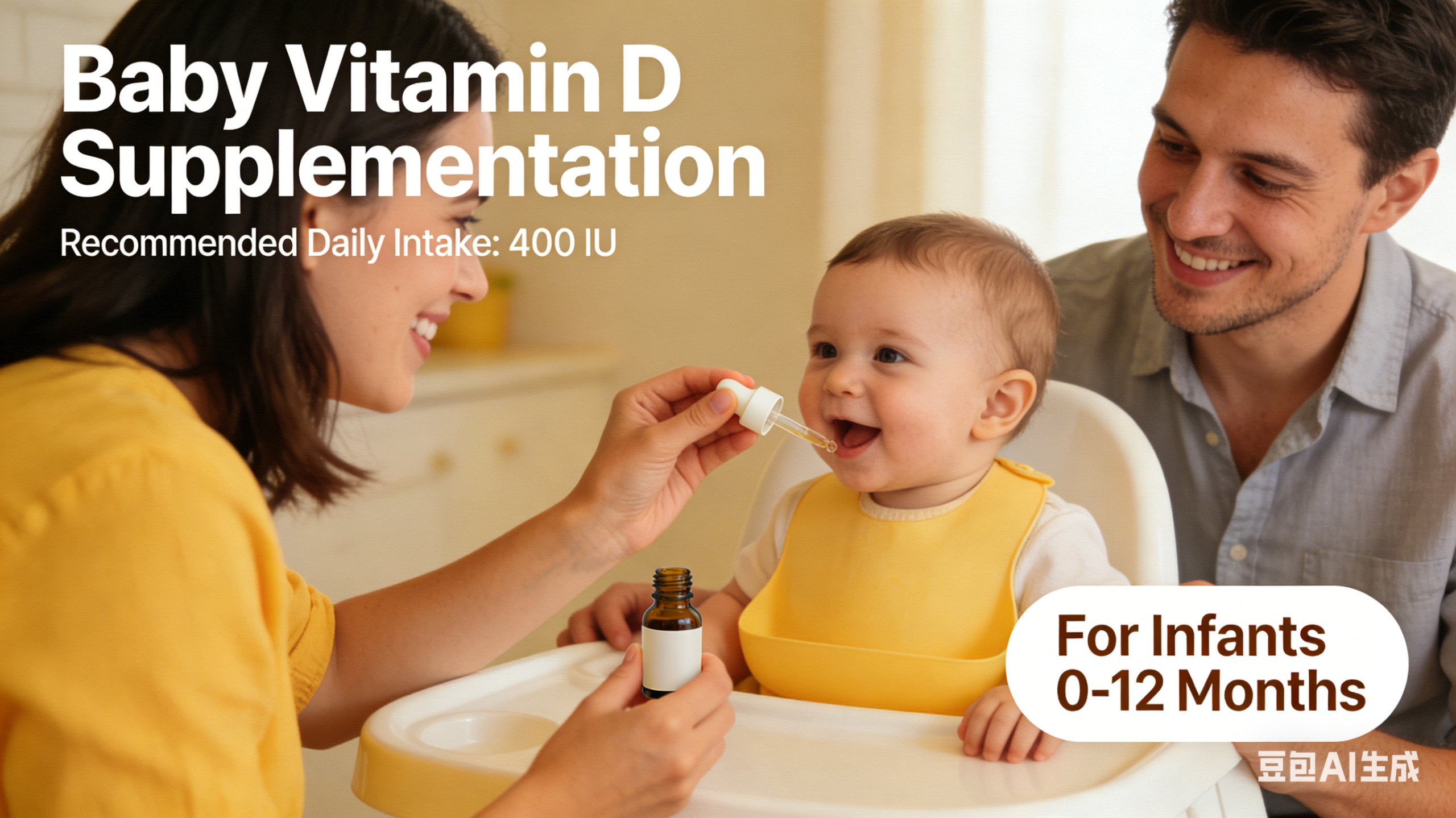




A Complete Guide to Vitamin D Supplementation
Vitamin D is often called the “sunshine vitamin” because our bodies produce it when skin is exposed to sunlight. For babies, however, getting enough vitamin D from sunshine and food alone is challenging. This guide provides evidence-based information on why vitamin D matters, how to supplement correctly, and answers to common questions about different supplements.
*Disclaimer: This information is for educational purposes only and does not replace professional medical advice. Always consult your health visitor, GP, or paediatrician for concerns about your baby.*
1. Why Vitamin D Matters for Babies
Vitamin D is a fat-soluble vitamin that is essential for calcium absorption and bone health. At birth, human infants have a limited amount of vitamin D stores that primarily reflect transfer from the mother during pregnancy .
Key functions:
– Bone health: Vitamin D is required to maintain blood calcium and promote bone mineralisation. Deficiency can lead to rickets (soft, malformed bones), seizures due to low blood calcium, and difficulty breathing .
– Immune function: Vitamin D plays a role in immune regulation and may help reduce the risk of respiratory infections .
– Long-term health: Vitamin D deficiency in infancy is thought to increase the risk of other diseases, including type 1 diabetes later in childhood .
Deficiency is common: Vitamin D deficiency in infants is evident throughout the world, covering a wide range of geographic regions and cultures . Values of 25-hydroxyvitamin D below 30 nmol/L indicate high risk of deficiency, while healthy concentrations are at or above 50 nmol/L .
2. Can Babies Get Enough Vitamin D from Food Alone?
The short answer: No—diet alone is rarely sufficient.
Natural food sources are limited:
– Very few foods naturally contain vitamin D, and they are not exactly the most consumed ones .
– Oily fish such as herring (27.0 µg/100 g), salmon (9.9 µg/100 g), sardines (7.9 µg/100 g), and tuna (4.5 µg/100 g) are good sources but are not suitable as primary sources for infants .
– Sun-dried mushrooms (3.9 µg/100 g) contain small amounts .
– Cod liver oil is extremely high (210 µg/100 g) but contains vitamin A, which requires careful dosing .
Breast milk content:
– Breast milk contains only 0.5-1.8 micrograms of vitamin D per litre—far below what infants need .
– Even with optimal maternal vitamin D status, breast milk alone cannot meet infant requirements.
Fortified foods:
– Systematic vitamin D food fortification (e.g., milk, cereals) is an effective alternative in some countries , but:
– Not all countries have mandatory fortification policies
– Infants under 6 months consume mostly milk, not fortified solids
– Formula-fed babies get vitamin D from fortified formula, but breastfed babies do not
Conclusion: For breastfed infants, supplements are necessary. Formula-fed infants may need supplements if consuming less than 500-1000 ml of formula daily (depending on concentration).
3. How to Supplement Vitamin D: Practical Guidelines
Recommended Doses
| Age Group | Recommended Daily Intake | |
|---|---|---|
| Infants 0-12 months (breastfed) | 400 IU (10 mcg) | |
| Infants 0-12 months (formula-fed) | 400 IU if consuming <500-1000 ml formula daily | |
| Children 1-18 years | 400-800 IU (10-20 mcg) | |
| Very low birth weight infants (<1.5 kg) | 400-1000 IU daily until 6 months |
When to start: Supplements are usually recommended to begin within the first month of birth . Many experts recommend starting around **1-2 weeks of age** .
Duration: Continue until the infant can obtain adequate vitamin D from other foods . Chinese guidelines recommend supplementation at least until 3 years of age, with some experts suggesting continuation through adolescence .
Types of Supplements
| Supplement Type | What It Contains | Best For |
|---|---|---|
| Vitamin D drops | Pure vitamin D3 (cholecalciferol) or D2 (ergocalciferol) | Breastfed infants; older children |
| Vitamin AD combination | Vitamin A + Vitamin D (usually 1500-2000 IU A : 400-800 IU D) | Infants in regions with vitamin A deficiency risk |
| Multivitamin drops | Vitamin D + other vitamins | Children with broader nutritional concerns |
Important note: Do not give both vitamin AD and vitamin D separately—this can lead to excessive vitamin D intake and potential toxicity .
4. Vitamin D vs Vitamin AD: What’s the Difference?
This is one of the most common questions parents face.
| Factor | Vitamin D Only | Vitamin AD Combination |
|---|---|---|
| Contents | Pure vitamin D (400 IU per dose) | Vitamin A (1500-2000 IU) + Vitamin D (400-800 IU) |
| Purpose | Prevent/treat vitamin D deficiency | Prevent deficiencies of both vitamins |
| When indicated | Universal recommendation for all infants | Recommended in populations with vitamin A deficiency risk |
| Chinese guideline | Minimum recommendation | Birth to 3+ years recommended per 2024 Chinese consensus |
| UK/EU approach | Universal vitamin D; vitamin A not routinely supplemented | Vitamin A supplements recommended for children 6 months-5 years in UK (part of Healthy Start vitamins) |
| Advantages | Precise dosing; no risk of excess vitamin A | Convenient; synergistic effects (vitamin A enhances vitamin D activity by 130%) |
| Considerations | May need separate vitamin A if diet inadequate | Fixed ratio may not suit all infants |
Expert insights:
– Vitamin A and D have synergistic effects—vitamin A can increase vitamin D biological activity by 130% .
– Research shows that for 6-month-old infants, alternating between vitamin AD and vitamin D does NOT improve serum retinol levels and may reduce compliance .
– The Chinese 2024 expert consensus recommends **daily continuous supplementation with vitamin AD** from birth through at least 3 years .
The choice depends on:
– Your country’s public health recommendations
– Your baby’s diet (breastfed vs formula-fed)
– Regional prevalence of vitamin A deficiency
– Whether your baby receives vitamin A from other sources
5. How Long Should Vitamin D Supplementation Continue?
Current recommendations suggest much longer than previously thought.
| Age Group | Recommendation | Rationale |
|---|---|---|
| 0-12 months | 400 IU daily | Prevent deficiency and rickets |
| 1-3 years | 400-800 IU daily | Rapid growth continues; dietary intake often inadequate |
| 3-18 years | 400-800 IU daily or individualised | Surveys show vitamin D deficiency rates increase with age; adolescence has high requirements |
Chinese 2024 consensus: Vitamin D deficiency in children increases with age. The recommended duration is **through adolescence** .
Individualised approach: After age 1, supplementation should be individualised based on:
– Sun exposure (latitude, season, outdoor time)
– Dietary intake (oily fish, fortified foods)
– Risk factors (dark skin, limited sun exposure, certain medical conditions)
6. Vitamin D vs Cod Liver Oil vs Fish Oil: Critical Distinctions
Parents often confuse these supplements, but they are completely different products.
| Feature | Vitamin D Supplements | Cod Liver Oil | Fish Oil |
|---|---|---|---|
| Source | Synthetic or lanolin-derived | Liver of cod fish | Body tissues of oily fish |
| Main ingredients | Vitamin D only (or D + A) | Vitamin A + Vitamin D + small omega-3s | EPA + DHA (omega-3 fatty acids) |
| Vitamin D content | 400 IU per dose (standardised) | Variable (~400-1000 IU per tsp) | Minimal to none |
| Vitamin A content | None (or 1500-2000 IU in AD combo) | Significant (often >4000 IU per tsp) | None |
| Primary use | Prevent vitamin D deficiency | Prevent vitamin A/D deficiency | Support brain/heart health |
| For infants? | Yes—specifically formulated | Not recommended—vitamin A dose too high and variable | No—EPA not recommended under 2 years |
Why cod liver oil is NOT recommended for infants:
– Vitamin A content is highly variable and often exceeds safe limits for daily use
– The vitamin A: D ratio is not designed for infant requirements
– Risk of vitamin A toxicity with prolonged use
– Better alternatives exist (vitamin D drops or age-appropriate AD combinations)
Why fish oil is NOT a vitamin D source:
– Fish oil contains EPA and DHA (omega-3s), NOT significant vitamin D
– Using fish oil for vitamin D would mean giving unnecessarily high omega-3s
– EPA is not recommended for infants under 2 years
– If you need omega-3s, choose an algae-based DHA supplement without EPA
Key takeaway: Vitamin D supplements (pure D or age-appropriate AD) are designed for infants. Cod liver oil and fish oil serve different purposes and are not suitable as vitamin D sources for babies.
7. Common Questions Answered
Q: Does my formula-fed baby need vitamin D supplements?
A: It depends on how much formula they drink. Standard infant formula is fortified with vitamin D (typically 40-50 IU per 100 ml prepared). If your baby drinks **less than 500-1000 ml daily** (depending on brand concentration), they may need additional vitamin D to reach 400 IU. Check the formula label and consult your health visitor .
Q: Can my baby get enough vitamin D from sunlight?
A: While skin synthesis is the primary natural source, it is unreliable for infants because:
– Parents are advised to limit infant sun exposure (hats, blankets, avoidance of direct sun)
– At latitudes >37° (north or south), UVB is insufficient for vitamin D production during late fall to early spring
– Darker skin pigmentation reduces vitamin D synthesis
– The risks of sun exposure outweigh benefits for infants
Q: What are the signs of vitamin D deficiency?
A: In infants, deficiency can manifest as:
– Soft, malformed bones (rickets)
– Seizures due to low blood calcium
– Difficulty breathing
– Delayed growth
– Irritability
Q: Can too much vitamin D be harmful?
A: Yes, vitamin D is fat-soluble and can accumulate to toxic levels, but this is rare with recommended doses. Signs of toxicity include:
– Nausea, vomiting
– Poor appetite
– Constipation
– Weakness
– Weight loss
The safe upper limit is far above recommended doses, but never exceed the dose recommended by your healthcare provider .
Q: Do I need to worry about vitamin A if I choose vitamin AD?
A: In recommended doses (1500-2000 IU daily), vitamin A is safe and beneficial. The Chinese 2024 consensus confirms that this dose is well below toxicity thresholds. However, do not combine multiple vitamin A-containing products .
8. Summary: Action Plan for Parents
| Situation | Recommendation |
|---|---|
| Exclusively breastfed infant | Start vitamin D supplement (400 IU daily) within first 2 weeks; continue through infancy |
| Formula-fed infant drinking <500 ml daily | Supplement to reach total 400 IU daily |
| Formula-fed infant drinking ≥500-1000 ml daily | Check formula concentration; may not need supplement |
| Infant in UK (all breastfed) | NHS recommends vitamin D drops (8.5-10 mcg daily) from birth |
| Infant in China | Chinese 2024 consensus recommends vitamin AD (1500-2000 IU A + 400-800 IU D) from birth through at least 3 years |
| Very low birth weight infant | Follow neonatologist guidance; typically 400-1000 IU daily |
| Child over 1 year with limited sun exposure | Consider continuing 400-600 IU daily |
Remember: Vitamin D supplementation is one of the few universally recommended interventions for infants. The evidence is clear that it prevents deficiency and supports lifelong bone health.
**Resources:**
– NHS Start for Life: www.nhs.uk/start-for-life
– The Lullaby Trust (safe sleep and vitamin D): www.lullabytrust.org.uk
– First Steps Nutrition Trust: www.firststepsnutrition.org
*References available upon request. Key sources: PubMed 2025 review , WHO infant vitamin D guidance , WHO low birth weight guidance , Spanish vitamin D review , Chinese 2024 expert consensus , Shanghai First Maternity and Infant Hospital .*
a.本站所有文章,如无特殊说明或标注,均为本站原创发布。
b.任何个人或组织,在未征得本站同意时,禁止复制、盗用、采集、发布本站内容到任何网站、书籍等各类媒体平台。
c.如若本站内容侵犯了原著者的合法权益,可联系我们进行处理。







No comments yet