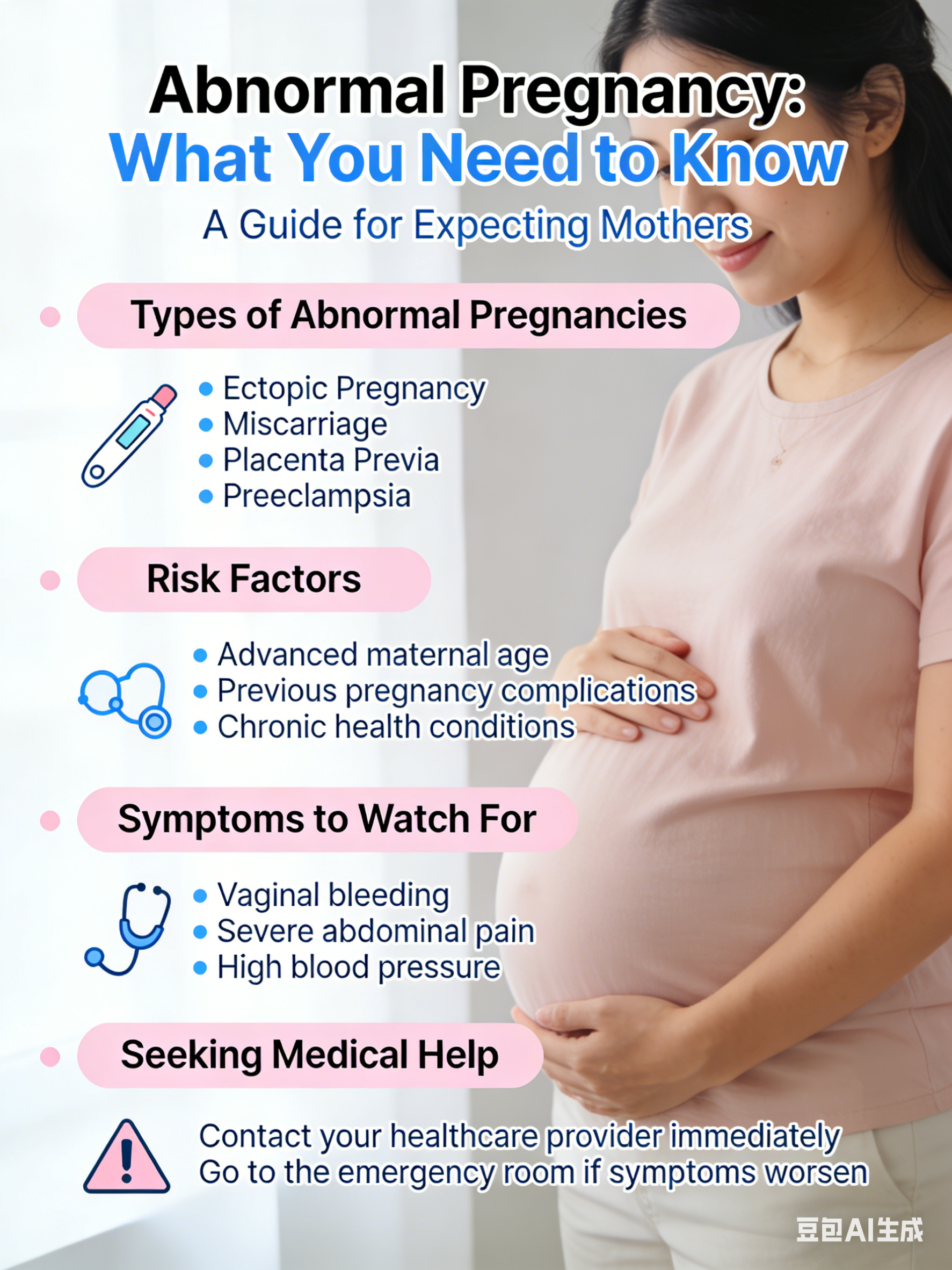




Early pregnancy complications are more common than many realise, with approximately 15-20% of all confirmed pregnancies ending in miscarriage . Understanding the terminology, clinical features, and management of these conditions can help healthcare professionals and patients navigate these challenging experiences. This guide provides evidence-based definitions and explanations of various abnormal pregnancy scenarios.
Disclaimer: This information is for educational purposes only and does not replace professional medical advice. Always consult a qualified healthcare provider for concerns about pregnancy.
1. Threatened Miscarriage
Definition: A pregnancy complicated by vaginal bleeding before 20 weeks’ gestation, with a closed cervix and confirmed fetal viability .
Clinical features: Slight vaginal bleeding, mild pelvic pain, cervix remains closed, uterus size appropriate for gestational age .
Prognosis: Approximately 50% of women who experience first-trimester bleeding will go on to have a healthy baby .
Management: Bed rest is often advised, though evidence is limited. Ultrasound assessment to confirm viability and exclusion of other causes. Monitoring of symptoms.
2. Inevitable Miscarriage
Definition: A pregnancy in which vaginal bleeding is accompanied by cervical dilation, but the products of conception have not yet been expelled .
Clinical features: Bright red bleeding, passage of clots, open cervix, possible rupture of membranes, severe cramping pain due to uterine contractions .
Management: The miscarriage cannot be prevented and will progress to completion. Options include expectant management, medical management (misoprostol), or surgical evacuation (Surgical Management of Miscarriage).
3. Complete Miscarriage
Definition: Spontaneous expulsion of all products of conception from the uterus before 24 weeks’ gestation .
Clinical features: History of heavy bleeding followed by cessation of pain and bleeding, cervix closed on examination, ultrasound shows empty uterine cavity .
Management: Histological examination of passed tissue is recommended to exclude hydatidiform mole . No further intervention required if bleeding settles.
4. Incomplete Miscarriage
Definition: Expulsion of some, but not all, products of conception, with retained tissue remaining in the uterine cavity .
Clinical features: Persistent bleeding (continuing >24 hours), open cervix, risk of haemorrhage and infection .
Management: Surgical evacuation (Suction Evacuation) or medical management to remove retained products of conception .
5. Missed Miscarriage (Silent Miscarriage / Delayed Miscarriage)
Definition: A pregnancy in which the embryo or fetus has died but the products of conception are retained within the uterus .
Clinical features: Few external signs of pregnancy, uterus fails to enlarge, cervix remains closed, pregnancy symptoms may disappear. Often diagnosed on routine ultrasound .
Management: Expectant management (waiting for spontaneous expulsion), medical management, or surgical evacuation.
6. Recurrent Pregnancy Loss / Recurrent Miscarriage
Definition: Traditionally defined as three or more consecutive pregnancy losses. More recent guidelines define it as **two or more pregnancy losses** (including non-consecutive and biochemical pregnancies) .
Incidence: Affects 1-2% of women .
Causes: Chromosomal abnormalities, anatomical factors (uterine anomalies), endocrine disorders (thyroid dysfunction, diabetes), antiphospholipid syndrome, thrombophilias, chronic endometritis .
Management: Comprehensive evaluation including parental karyotyping, uterine cavity assessment, endocrine testing, and thrombophilia screening. Progesterone supplementation in early pregnancy may be beneficial . Trauma-informed care and emotional support are essential .
7. Ectopic Pregnancy
Definition: A pregnancy that implants outside the uterine cavity, most commonly (80%) in the ampullary portion of the fallopian tube .
Incidence: Approximately 1 in 80 pregnancies (2% of all pregnancies) .
Types of ectopic pregnancy :
– Tubal (ampullary, isthmic, fimbrial, interstitial)
– Cornual (implantation within the cornua of a bicornuate or septate uterus)
– Cervical
– Ovarian
– Abdominal
– Caesarean scar
– Heterotopic (coexisting intrauterine and extrauterine pregnancy)
Risk factors : Previous ectopic pregnancy, tubal damage (infection/surgery), history of infertility/IVF, increasing maternal age, smoking, pelvic inflammatory disease (especially chlamydia).
Clinical features : Classic triad: pain, amenorrhoea, vaginal bleeding (present in only 50%). Other symptoms: shoulder tip pain (indicating diaphragmatic irritation from blood), fainting, abdominal tenderness, adnexal mass.
Complications: Tubal rupture typically occurs at 8-12 weeks’ gestation and is a life-threatening emergency requiring immediate surgical intervention .
8. Biochemical Pregnancy
Definition: A very early pregnancy loss occurring before ultrasound visualization, diagnosed by temporarily elevated serum or urine hCG that subsequently declines .
Clinical features: Positive pregnancy test followed by bleeding, no gestational sac visible on ultrasound.
Significance: Now included in definitions of recurrent pregnancy loss .
9. Anembryonic Pregnancy (Blighted Ovum)
Definition: A pregnancy in which a gestational sac forms but an embryo fails to develop.
Clinical features: Ultrasound shows gestational sac with absent yolk sac and absent embryonic pole. Falling or plateauing hCG levels.
Management: As for missed miscarriage.
10. Fetal Demise / Intrauterine Fetal Death
Definition: Death of the fetus after confirmed viability but before complete expulsion.
Timing: Can be classified as early (before 20-24 weeks) or late (after 24 weeks).
Management: Delivery of the deceased fetus, usually via induction of labour.
11. Molar Pregnancy (Hydatidiform Mole)
Definition: A trophoblastic disorder resulting from abnormal fertilization, characterized by proliferation of trophoblastic tissue and cystic degeneration of placental villi .
Incidence: Approximately 1-2 per 1000 pregnancies in Western countries .
Types :
| Feature | Complete Mole | Partial Mole |
|---|---|---|
| Karyotype | 46,XX or 46,XY (all paternal) | Triploid (69,XXY or 69,XYY) |
| Fetal tissue | Absent | May be present (non-viable) |
| Ultrasound | “Snowstorm” or “cluster of grapes” pattern | Thickened placenta with cystic spaces |
| Risk of GTN | 15-20% | 1-4% |
Risk factors : Extremes of maternal age (<20 or >40 years), previous molar pregnancy, Asian ethnicity .
Clinical features : Irregular first-trimester bleeding (50%), uterine size larger than dates, hyperemesis gravidarum, early-onset preeclampsia (<20 weeks), hyperthyroidism symptoms, passage of grape-like vesicles (rare, pathognomonic).
Diagnosis : Elevated hCG (>100,000 IU/L), characteristic ultrasound findings, definitive diagnosis by histopathology.
Treatment : Suction evacuation (preferred), hysterectomy in selected cases (completed family or high risk). Post-evacuation follow-up with serial hCG monitoring for at least 6 months to detect gestational trophoblastic neoplasia (GTN) .
Prognosis: Cure rate >98% with appropriate follow-up . Risk of recurrence <1% for partial mole .
12. Gestational Trophoblastic Neoplasia (GTN)
Definition: Malignant form of gestational trophoblastic disease that can follow molar pregnancy (most commonly) or normal pregnancy .
Diagnostic criteria : Plateaued or rising hCG following molar evacuation, histological diagnosis of choriocarcinoma.
Treatment: Chemotherapy, with cure rate >99% .
13. Cervical Pregnancy
Definition: Implantation within the endocervical canal .
Clinical features: Painless vaginal bleeding in first trimester, potentially life-threatening haemorrhage.
Management: Early diagnosis allows conservative treatment (methotrexate, uterine artery embolisation) to preserve fertility.
14. Caesarean Scar Pregnancy
Definition: Implantation within the scar of a prior Caesarean section .
Clinical features: Often asymptomatic early on, risk of uterine rupture and haemorrhage.
Management: Early termination usually recommended due to high morbidity if pregnancy continues.
15. Heterotopic Pregnancy
Definition: Coexistence of intrauterine and extrauterine pregnancy .
Incidence: Rare in spontaneous conceptions (1:30,000), more common with assisted reproductive technology.
Management: Treatment of ectopic component while preserving intrauterine pregnancy if possible.
16. Induced Abortion / Termination of Pregnancy
Definition: Intentional ending of a pregnancy before viability (usually <24 weeks in UK).
Methods: Medical (mifepristone + misoprostol) or surgical (vacuum aspiration).
Legal framework: Varies by jurisdiction; in UK, regulated by Abortion Act 1967 (as amended).
Summary Table: Classification of Miscarriage
| Type | Cervix | Products Passed | Bleeding | Management |
|---|---|---|---|---|
| Threatened | Closed | None | Mild | Observation |
| Inevitable | Open | None | Moderate-Heavy | Active management |
| Incomplete | Open | Partial | Persistent | Evacuation |
| Complete | Closed | All | Settling | Observation |
| Missed | Closed | None | Minimal | Active/expectant |
Support Resources:
– Miscarriage Association (UK): www.miscarriageassociation.org.uk
– Ectopic Pregnancy Trust: www.ectopic.org.uk
– Sheffield Trophoblastic Disease Centre: Weston Park Hospital, Sheffield
*References available on request.*
a.本站所有文章,如无特殊说明或标注,均为本站原创发布。
b.任何个人或组织,在未征得本站同意时,禁止复制、盗用、采集、发布本站内容到任何网站、书籍等各类媒体平台。
c.如若本站内容侵犯了原著者的合法权益,可联系我们进行处理。








No comments yet