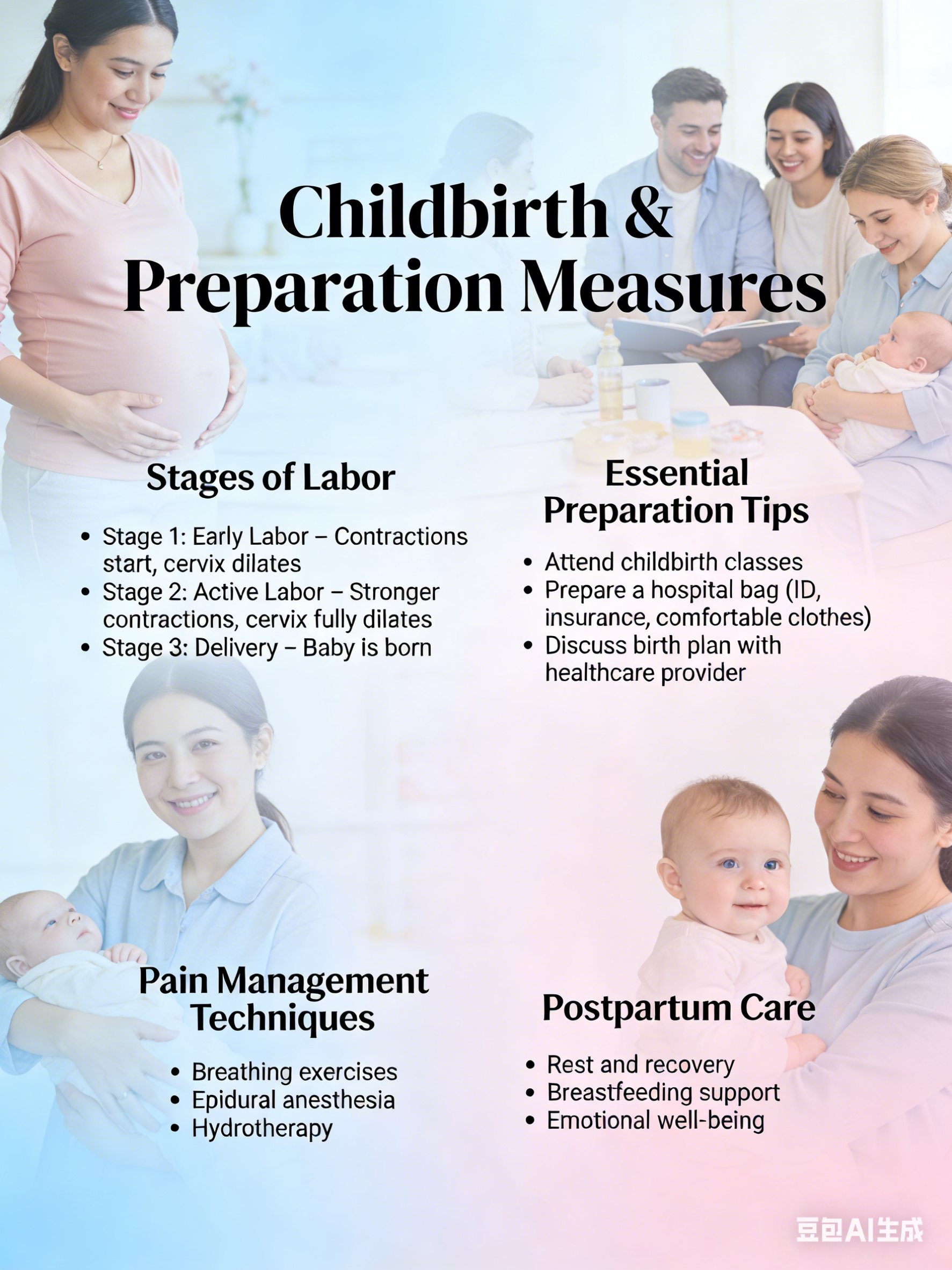




Preparing for Childbirth (Part 2): A Comprehensive Guide to Labour Readiness
Understanding the practical, physical, and emotional aspects of labour can help expectant parents approach childbirth with confidence. This guide covers essential topics to support informed decision-making and a positive birth experience.
*Disclaimer: This information is for educational purposes only and does not replace professional medical advice. Always consult your midwife or obstetrician for guidance specific to your pregnancy.*
1. Hospital Bag Essentials
Packing your hospital bag in advance (around 36 weeks) ensures you’re prepared when labour begins.
For Mum:
– Documents: Birth plan, NHS maternity notes, identification, hospital pre‑registration forms
– Comfortable clothing: Loose nightdresses or pyjamas (front‑opening for breastfeeding), dressing gown, slippers, non‑slip socks
– Toiletries: Toothbrush, toothpaste, hairbrush, lip balm, glasses/contact lenses, maternity pads (super absorbent), breastfeeding bras, nipple cream
– Snacks and drinks: Easy‑to‑eat snacks (biscuits, fruit, cereal bars), isotonic drinks, water bottle
– For after birth: High‑waisted knickers, comfortable clothes to go home in (consider your post‑birth tummy)
For Baby:
– Nappies: At least 10 newborn nappies
– Clothing: 4–6 sleepsuits, 2–3 vests, cardigan or hat, scratch mitts
– Going home outfit: Depending on season – babygrow, blanket, snowsuit if cold
– Feeding equipment: If formula feeding, bring ready‑to‑feed bottles; if breastfeeding, bring nipple shields if you use them
– Muslin squares: Several for burping and general use
For Partner/Support Person:
– Snacks, drinks, phone charger, camera, change for parking, comfortable clothing
2. Nutrition During Labour
Eating and drinking in labour depends on your stage, preferences, and hospital policy.
– Early labour: Light, easily digestible snacks are encouraged – toast, crackers, bananas, yoghurt, soup. Stay hydrated with water or isotonic drinks.
– Active labour: Many hospitals now allow clear fluids (water, ice chips, isotonic drinks) but may restrict solid food due to the small risk of aspiration if general anaesthesia becomes necessary. Follow your maternity unit’s guidance.
– Energy needs: Labour is physically demanding; aim for slow‑release energy (complex carbohydrates) early on. Avoid heavy, fatty, or spicy foods that may cause nausea.
3. Doula Support
A doula is a trained non‑medical professional who provides continuous physical, emotional, and informational support throughout pregnancy, birth, and the postnatal period.
– Role during labour: Offers comfort measures (massage, positioning), advocacy (helping communicate wishes), reassurance, and practical help. Does not perform clinical tasks.
– Evidence: Studies show continuous doula support is associated with shorter labour, reduced need for pain relief, fewer caesarean sections, and higher satisfaction.
– Finding a doula: Look for accredited doulas (e.g., through Doula UK). Discuss fees, availability, and philosophy to ensure a good match.
4. Labour Intolerance
Labour intolerance refers to a situation where the mother is unable to cope with the physical or emotional demands of labour, potentially leading to distress and exhaustion.
– Signs: Inability to rest between contractions, overwhelming anxiety, panic, severe pain unrelieved by coping strategies, desire to “give up.”
– Causes: Prolonged labour, intense pain, inadequate pain relief, exhaustion, fear, or lack of support.
– Management: Reassess pain relief options (e.g., epidural), provide one‑to‑one support, consider rest with sedation if appropriate, or discuss alternative birth plans if progress stalls.
5. Fear of Childbirth (Tokophobia)
Fear of childbirth is a recognised condition ranging from mild anxiety to severe, debilitating fear that may affect birth choices.
– Primary tokophobia: Fear existing before pregnancy, often due to previous trauma, abuse, or negative stories.
– Secondary tokophobia: Develops after a traumatic previous birth experience.
– Impact: May lead to requests for elective caesarean, avoidance of pregnancy, or severe distress during labour.
– Support: Antenatal classes, birth debriefing, counselling (CBT, trauma‑focused therapy), discussing fears with your midwife or obstetrician, creating a detailed birth plan.
6. Labour Assessment
Determining whether you are in established labour and how labour is progressing is crucial for appropriate management.
– When to contact your midwife:
– Regular, painful contractions (e.g., 3 in 10 minutes, each lasting 60 seconds)
– Waters breaking (rupture of membranes) – note colour, odour, time
– Vaginal bleeding (other than a show)
– Reduced fetal movements
– Any concerns before 37 weeks
– Assessment in hospital:
– History: Onset, frequency, duration of contractions; membrane status; fetal movements.
– Examination: Observation of contractions, abdominal palpation (lie, presentation, engagement), vaginal examination (cervical dilation, effacement, station).
– Monitoring: Fetal heart rate auscultation or continuous CTG if indicated.
– Diagnosis of active labour: Regular painful contractions + cervical dilation ≥4 cm.
7. Back Labour
Back labour refers to intense, persistent lower back pain during contractions, often caused by the baby’s position (occiput posterior – “back‑to‑back”).
– Causes: Baby’s occiput (back of head) presses against mother’s sacrum, causing prolonged pressure on nerves and bones.
– Symptoms: Severe, continuous back pain even between contractions; may be accompanied by slower labour progress.
– Relief measures:
– Positioning: Hands and knees, lunges, pelvic rocking, leaning forward on a birth ball or bed.
– Counter‑pressure: Firm pressure on the lower back during contractions (partner’s fist or tennis balls).
– Heat/ cold: Warm packs or ice packs on the lower back.
– Water: Immersion in a warm bath or shower can ease pain.
– Pain relief: Consider TENS machine, entonox, or epidural if needed.
8. Labour Pain Management
Pain in labour is subjective, and a range of options allows individualised care.
Non‑Pharmacological:
– Breathing and relaxation techniques: Slow, rhythmic breathing; visualisation; hypnobirthing.
– Movement and positioning: Upright positions, walking, rocking, using a birth ball.
– Water: Warm bath or shower (hydrotherapy).
– Massage and touch: Gentle stroking, counter‑pressure for back pain.
– TENS machine: Transcutaneous electrical nerve stimulation – small electrical pulses to block pain signals; useful in early labour.
– Acupuncture / acupressure: May help some women.
Pharmacological:
– Entonox (gas and air): Inhaled mixture of oxygen and nitrous oxide; self‑administered; provides mild to moderate pain relief; does not eliminate pain but helps take the edge off.
– Opioid injections: Pethidine or diamorphine given intramuscularly; provide sedation and pain relief for a few hours; may cause drowsiness in baby (rarely affects breathing if birth imminent).
– Epidural: Regional anaesthesia blocking pain from the lower body; provides excellent pain relief but may increase likelihood of instrumental delivery; requires continuous monitoring; top‑ups or patient‑controlled pump available.
9. Assisted Vaginal Delivery
Assisted vaginal delivery (operative vaginal delivery) uses instruments to help deliver the baby when the second stage is prolonged or there is concern for mother or baby.
Indications:
– Maternal exhaustion
– Prolonged second stage (nulliparous >2 hours; multiparous >1 hour)
– Fetal distress (abnormal heart rate)
– Need to shorten pushing (e.g., maternal cardiac condition)
Methods:
– Ventouse (vacuum extractor): Soft or metal cup applied to baby’s head; gentle traction with contractions.
– Forceps: Curved metal instruments applied around baby’s head; used when more control is needed (e.g., malposition, rotational delivery).
Requirements for safe assisted delivery:
– Fully dilated cervix
– Ruptured membranes
– Engaged head (station at least 0/+1)
– Known position of baby’s head
– Adequate analgesia (epidural or spinal usually required for forceps; ventouse may be done with local anaesthetic if straightforward)
– Empty bladder (catheterised)
– Experienced operator
Risks:
– For mother: Perineal tears (especially 3rd/4th degree with forceps), vaginal/ cervical lacerations, postpartum haemorrhage.
– For baby: Temporary marks on face/head, bruising, cephalhaematoma (ventouse), rarely facial nerve injury or skull fracture (very rare with skilled use).
– Failed attempt: If not progressing, proceed to caesarean section.
Final thoughts: Every birth is unique, and being informed about these aspects empowers you to work in partnership with your maternity team. Consider discussing your preferences and concerns during antenatal appointments to create a birth plan that reflects your values and circumstances.
*References available on request.*
a.本站所有文章,如无特殊说明或标注,均为本站原创发布。
b.任何个人或组织,在未征得本站同意时,禁止复制、盗用、采集、发布本站内容到任何网站、书籍等各类媒体平台。
c.如若本站内容侵犯了原著者的合法权益,可联系我们进行处理。









No comments yet