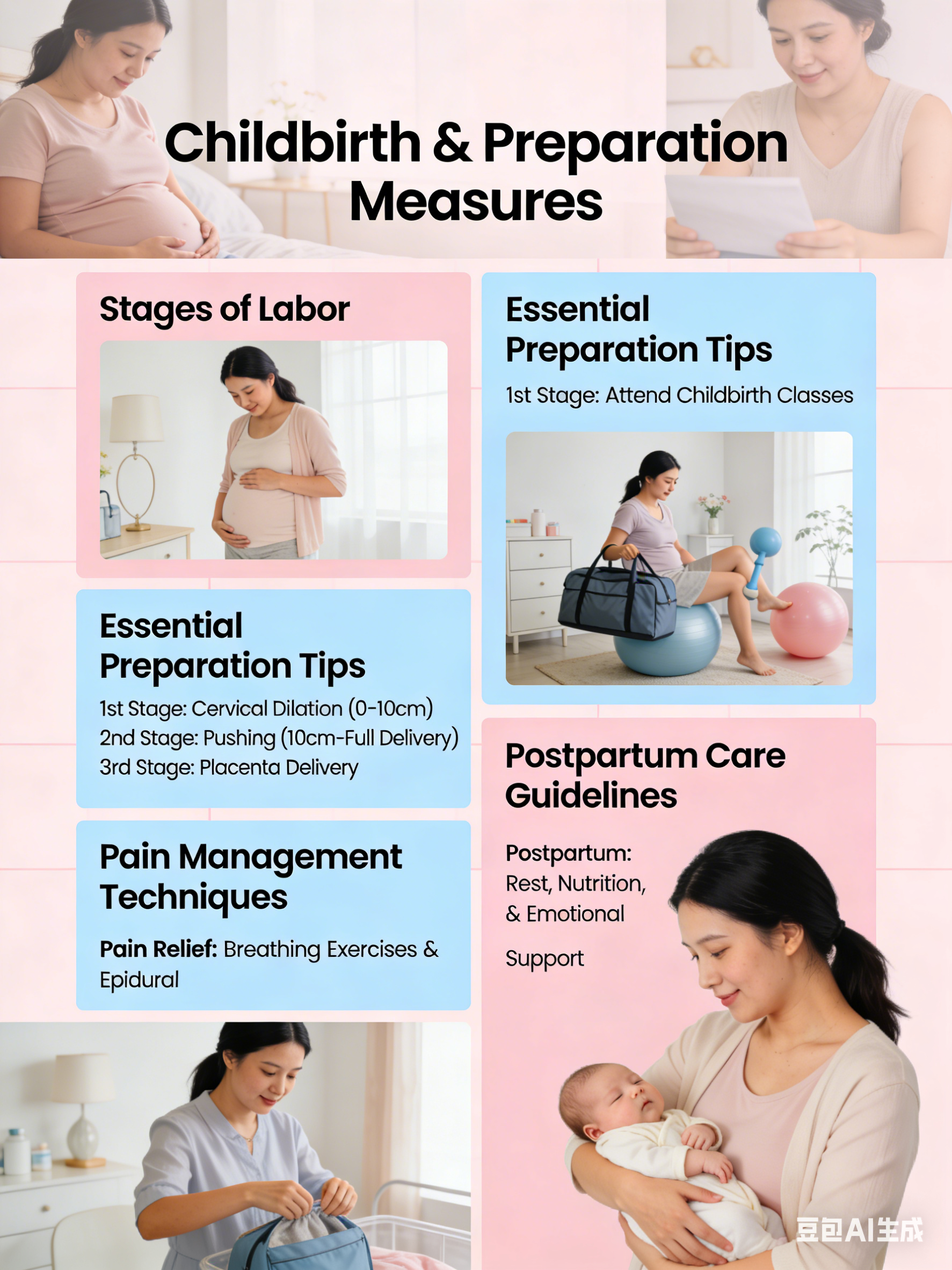




Preparing for Childbirth (Part 4): A Professional Guide to Labour Onset, Positions, and Special Considerations
As your due date approaches, understanding the signs of labour, effective positions, and potential scenarios can help you feel more prepared for the birth experience. This guide covers essential topics from the first signs of labour to specific situations such as twins and water birth.
*Disclaimer: This information is for educational purposes only and does not replace professional medical advice. Always consult your midwife or obstetrician for guidance specific to your pregnancy.*
1. Signs of Approaching Labour
The onset of labour is marked by a combination of physical changes. Not all women experience every sign, and the order can vary.
| Sign | Description | When to Contact Provider |
|---|---|---|
| Lightening (Engagement) | Baby drops into the pelvis, often making breathing easier but increasing pelvic pressure and urinary frequency. | Not urgent; note for your records. |
| Bloody show | Passage of the mucus plug mixed with blood (pink or brown discharge) as the cervix begins to dilate. | If bleeding is heavier than spotting, contact provider. |
| Rupture of membranes | Sudden gush or steady trickle of clear or pale fluid. | Contact immediately; note colour, odour, time. |
| Regular contractions | Contractions become progressively stronger, longer, and closer together. | When contractions are every 5 minutes for at least 1 hour (or as advised by your provider). |
| Cervical changes | Dilatation and effacement detected on examination. | Only assessed by professional. |
Other pre-labour signs may include nesting instinct, diarrhoea, or a general sense of restlessness .
2. Fetal Engagement (Lightening)
Definition: Engagement occurs when the presenting part of the fetus (usually the head) descends into the maternal pelvis, typically at the level of the ischial spines (station 0).
Timing: In first-time mothers, engagement often occurs 2-4 weeks before labour. In subsequent pregnancies, it may not happen until labour begins.
Signs:
– Easier breathing (less pressure on diaphragm)
– Increased pelvic pressure, urinary frequency
– Visible lowering of the belly
Clinical assessment: Engagement is assessed by abdominal palpation (number of fifths of head palpable) or vaginal examination (station).
3. Rupture of Membranes (Water Breaking)
Definition: Spontaneous rupture of the amniotic sac, releasing amniotic fluid.
Appearance: Fluid is usually clear, pale, or slightly straw-coloured. It may contain white specks (vernix).
What to do:
– Note the time, colour, odour, and amount.
– Wear a maternity pad (not a tampon).
– Contact your midwife or hospital immediately.
– If fluid is green or brown (meconium-stained), inform provider promptly.
Management:
– If labour does not start spontaneously within 24 hours, induction is usually offered to reduce infection risk .
– Pelvic rest (no intercourse, no baths) after membranes rupture.
Signs of infection: Foul-smelling discharge, fever, abdominal tenderness – seek urgent care.
4. Optimal Labour Positions
Upright and mobile positions during labour can enhance comfort, progress labour, and reduce interventions.
| Position | Benefits | When to Use |
|---|---|---|
| Upright (walking, standing) | Uses gravity to aid descent; shortens labour. | Early and active labour. |
| Sitting on birth ball | Encourages pelvic rocking; relieves back pain. | Throughout labour. |
| Hands and knees | Relieves backache; helps rotate posterior baby. | For back labour or malposition. |
| Side-lying | Allows rest; good for epidural; may improve fetal oxygenation. | Late labour or if exhausted. |
| Squatting | Opens pelvis by 10-15%; uses gravity. | Second stage for pushing. |
| Kneeling with support | Combines gravity with comfort; good for back pain. | Active and second stage. |
Evidence: Upright positions in the first stage reduce labour duration by approximately 1 hour compared to recumbent positions . In the second stage, upright positions may slightly reduce episiotomy rates and improve maternal satisfaction.
5. Breastfeeding Preparation
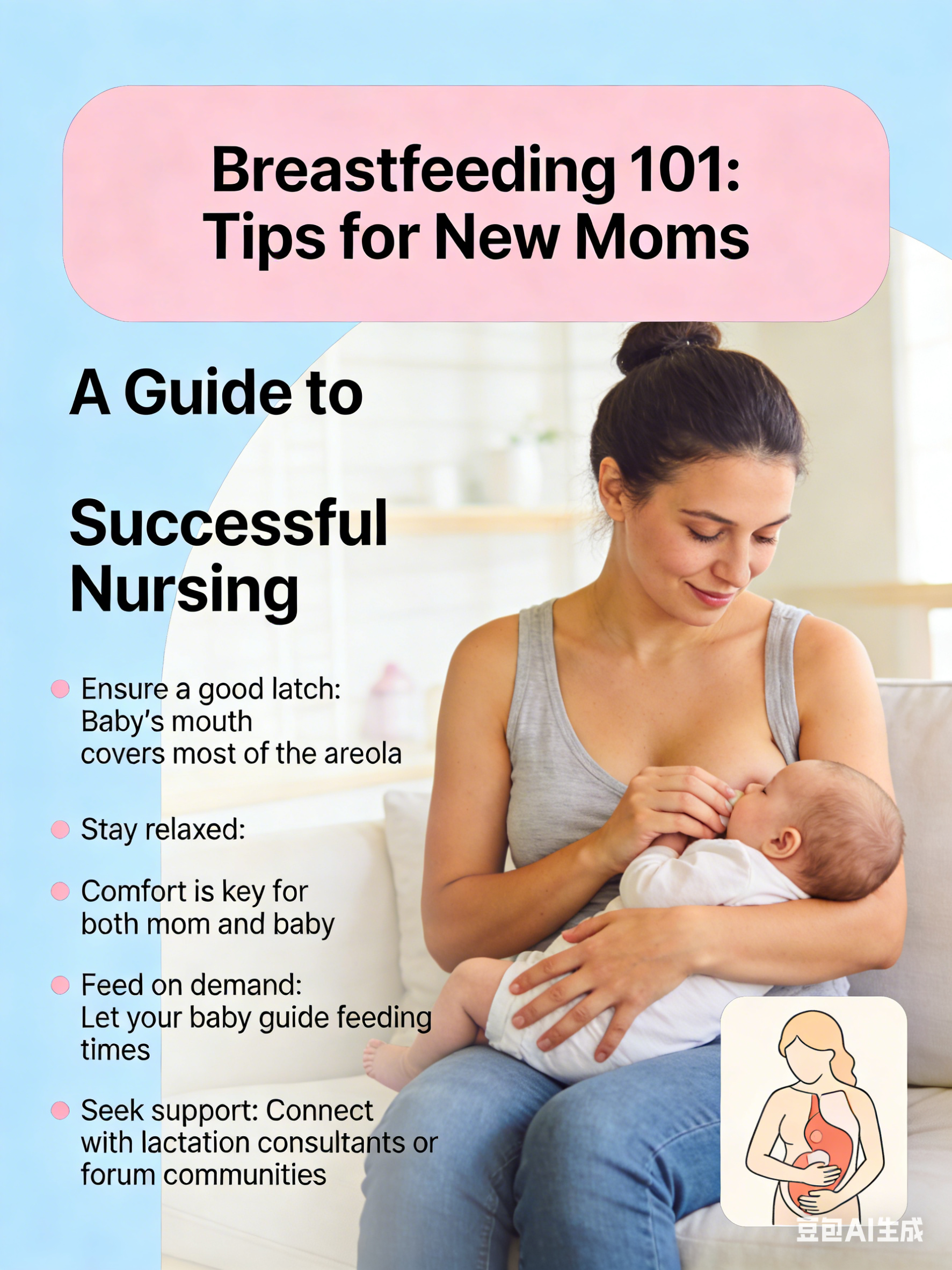
While breastfeeding is a natural process, preparation during pregnancy can support a successful start.
Antenatal preparation:
– Attend breastfeeding classes.
– Discuss feeding plans with your midwife.
– Consider antenatal expression of colostrum from around 36-37 weeks (seek guidance first – not recommended for all, e.g., high-risk pregnancies).
– Ensure supportive bras and breast pads are available.
Immediate postpartum:
– Skin-to-skin contact immediately after birth promotes bonding and instinctive feeding behaviours.
– First feed ideally within the first hour.
– Expect colostrum (thick, yellowish milk) for the first 2-4 days before mature milk comes in.
Common challenges: Latch difficulties, engorgement, nipple pain – seek lactation consultant support early .
6. Dystocia (Difficult Labour)
Definition: Abnormally slow or difficult labour, often due to inadequate uterine contractions, fetal malposition, or cephalopelvic disproportion.
Types:
– Protracted labour: Slower than normal progress.
– Arrest of labour: Complete cessation of progress.
Causes:
– Uterine factors: Inadequate or uncoordinated contractions (hypotonic dysfunction).
– Fetal factors: Malposition (occiput posterior, brow, face), malpresentation (breech), macrosomia.
– Pelvic factors: Contracted pelvis, tumours.
Management:
– Amniotomy (if membranes intact)
– Oxytocin augmentation
– Position changes
– If no progress, assisted vaginal delivery or caesarean section may be necessary.
7. Caesarean Section (C-Section)
Definition: Surgical delivery of the fetus through an incision in the maternal abdomen and uterus.
Indications:
– Maternal: Previous caesarean (though VBAC is possible), placenta praevia, active genital herpes, obstructed labour, maternal request after counselling.
– Fetal: Malpresentation (breech, transverse), fetal distress, cord prolapse, macrosomia.
Procedure:
– Regional anaesthesia (spinal or epidural) is most common; general anaesthesia used in emergencies.
– Incision: Usually low transverse (Pfannenstiel) in the skin and lower uterine segment.
– Baby delivered within minutes; placental removal and uterine repair follow.
– Partner may be present (if hospital policy permits).
Recovery:
– Hospital stay typically 2-4 days.
– Pain management, wound care, early mobilisation.
– Avoid heavy lifting, driving, and strenuous activity for 6 weeks.
– Pelvic floor exercises after healing.
8. Common Caesarean Section Questions
Q: Can I have a vaginal birth after a previous C-section (VBAC)?
A: Yes, many women are candidates for VBAC. Success rates range from 60-80%. Risks include uterine rupture (0.5-1%). Careful selection and monitoring are essential .
Q: Will I be awake during the operation?
A: Yes, with regional anaesthesia you are awake but numb from chest down. You can see and hold your baby immediately after delivery.
Q: How long does the surgery take?
A: Approximately 45 minutes to 1 hour; the baby is usually delivered within the first 5-10 minutes.
Q: Can I breastfeed after a C-section?
A: Absolutely. Positioning may require extra support (e.g., side-lying, football hold) to protect the incision.
Q: What is a gentle C-section?
A: A modified approach that includes clear drapes, immediate skin-to-skin, delayed cord clamping, and mother’s involvement in the birth.
9. Twin Pregnancy and Delivery
Incidence: Approximately 3% of all pregnancies (spontaneous dizygotic twins 1 in 90, monozygotic 1 in 250) .
Types:
– Dichorionic diamniotic (DCDA): Two placentas, two sacs; least risk.
– Monochorionic diamniotic (MCDA): One placenta, two sacs; requires closer monitoring.
– Monochorionic monoamniotic (MCMA): One placenta, one sac; high risk, rare.
Delivery considerations:
– Mode: Based on presentation of first twin, chorionicity, and maternal/foetal health.
– Vaginal delivery possible if: Both twins are cephalic (head-down) or first twin cephalic, second non-cephalic but experienced obstetrician available. Continuous monitoring essential.
– Caesarean often recommended for: Non-cephalic first twin, monochorionic monoamniotic, other complications.
Risks: Preterm labour (average gestation 36 weeks for twins), growth discordance, postpartum haemorrhage.
Postpartum: Careful monitoring of uterine tone and bleeding.
10. Water Birth
Definition: Labour and/or delivery in a warm water pool, using buoyancy and warmth for pain relief and relaxation.
Benefits:
– Reduces need for epidural and other analgesia .
– May shorten first stage of labour .
– Increases maternal satisfaction.
– Buoyancy promotes mobility and eases contractions.
Safety considerations:
– Who is suitable: Low-risk pregnancies, >37 weeks, single baby, cephalic presentation.
– Contraindications: Active herpes lesions, maternal fever, thick meconium, certain medical conditions (e.g., pre-eclampsia), need for continuous electronic monitoring.
– Fetal monitoring: Intermittent auscultation used; CTG not possible in water.
Water birth procedure:
– Pool filled with warm water (37°C).
– Mother can enter during active labour.
– Baby born under water; brought to surface immediately.
– Third stage (placenta) usually delivered out of water.
Neonatal considerations: No increased risk of infection or water aspiration with appropriate protocols .
**References available upon request.**
a.本站所有文章,如无特殊说明或标注,均为本站原创发布。
b.任何个人或组织,在未征得本站同意时,禁止复制、盗用、采集、发布本站内容到任何网站、书籍等各类媒体平台。
c.如若本站内容侵犯了原著者的合法权益,可联系我们进行处理。









No comments yet